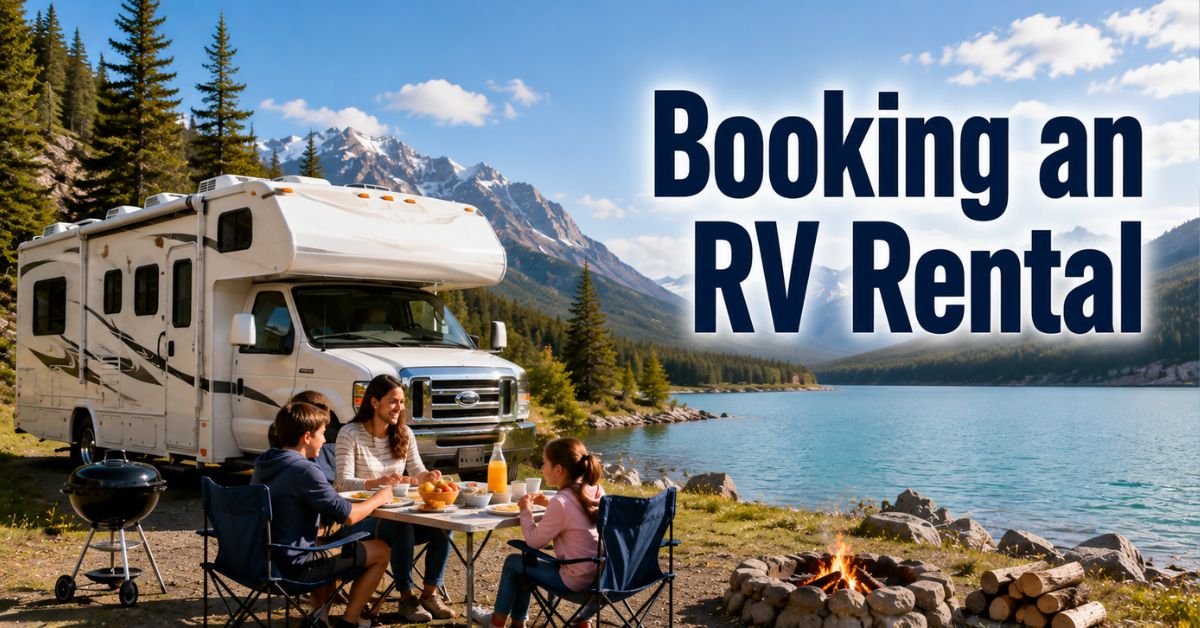
Booking an RV can turn an ordinary road trip into a flexible travel experience. Instead of travelling between hotels, restaurants, and attractions on a fixed schedule, an RV gives you the freedom to carry your accommodation with you. You can plan your own route, stop at scenic locations, prepare meals on the road, and spend more time exploring places at your own pace.
However, booking an RV rental is different from booking a hotel room or a standard car. The vehicle becomes your transportation, accommodation, kitchen, storage space, and sometimes your bathroom. That means you need to think about several practical details before making a reservation.
Knowing what to check before booking can help you choose a vehicle that suits your group, budget, driving experience, and travel plans. It can also help you avoid unexpected fees, unsuitable vehicle layouts, mileage charges, and other common problems.
If you are planning your first RV trip, these 10 things to know before booking an RV rental will help you make a more informed decision.
1. Choose the Right Type of RV
One of the first things to understand before booking an RV rental is that recreational vehicles come in different sizes, layouts, and categories. The best option depends on the number of travellers, your route, comfort requirements, and driving experience.
Class A Motorhomes
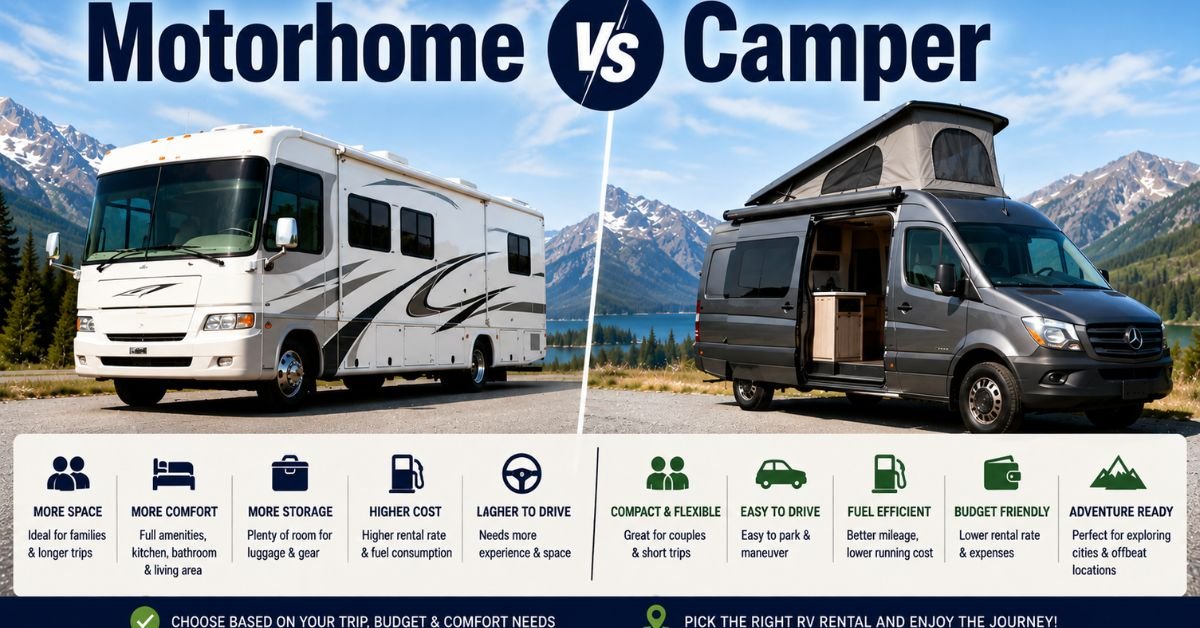
Class A motorhomes are usually among the largest RVs. They can provide spacious living areas, larger kitchens, bathrooms, multiple sleeping areas, and generous storage.
They can be a good choice for larger families or travellers who want a comfortable home-like environment during a longer trip. However, their size can make them more challenging to drive and park.
Class B Campervans
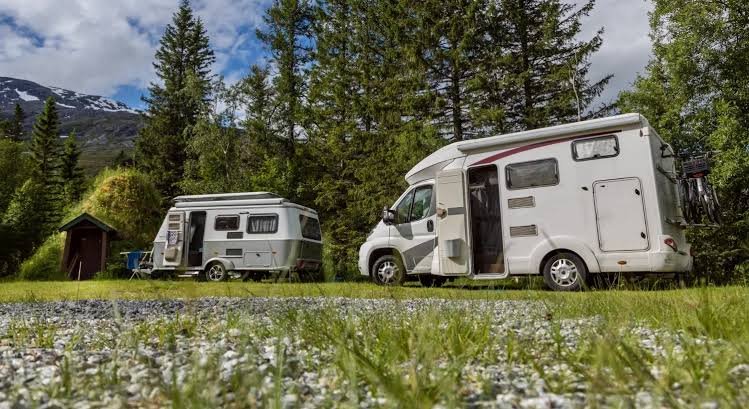
Class B campervans are generally smaller and easier to manoeuvre. They are often popular with couples and solo travellers who want flexibility.
Their compact size can make city driving, parking, and campsite access easier. The main trade-off is that interior living and storage space can be limited.
Class C Motorhomes
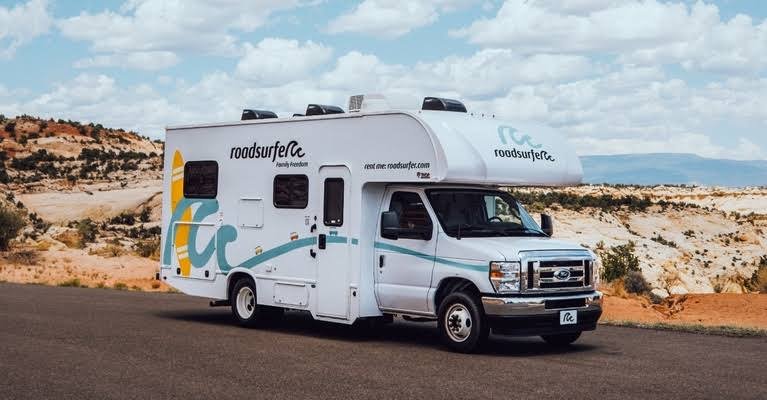
Class C motorhomes sit between many Class A and Class B options in terms of size. They often provide sleeping areas, a kitchen, bathroom facilities, and additional living space.
They can be particularly practical for families and first-time RV travellers who want a balance between comfort and drivability.
Travel Trailers
Travel trailers are towable RVs that require a suitable vehicle for towing. They come in many sizes, from compact trailers to larger family-friendly models.
Before booking a travel trailer, confirm that your vehicle can safely and legally tow it if you are providing your own tow vehicle.
When comparing an RV rental, do not choose a vehicle simply because it looks attractive. Consider how practical it will be for your specific journey.
2. Check How Many People the RV Can Accommodate
The number of travellers is one of the most important factors when booking an RV rental. Before confirming your reservation, check both the passenger capacity and sleeping capacity.
An RV might advertise that it sleeps six people, but that does not necessarily mean six adults will have a spacious or comfortable experience.
Look at the Sleeping Layout
Check where everyone will sleep. Some beds are permanent, while others may convert from dining tables, sofas, or other seating areas.
For a short trip, convertible sleeping areas may be perfectly practical. For a longer journey, you may prefer permanent beds that do not need to be rearranged every evening.
Consider Personal Space
Sleeping capacity is only one part of comfort. Travellers also need enough space for clothing, luggage, food, and personal belongings.
If you are travelling with children, consider whether the RV provides enough separation between sleeping and living areas.
If you are travelling as a couple, you may prefer a smaller RV with a comfortable bed rather than a large vehicle with more beds than you need.
Choosing an RV based on your actual group size can help you avoid paying for unnecessary space while making sure everyone has enough room.
3. Understand the Total RV Rental Cost
The advertised nightly price is not always the final amount you will pay. Before booking an RV rental, calculate the complete cost of your trip.
The total price may include several different expenses.
Base Rental Price
Start with the daily or nightly rental rate and multiply it by the number of nights.
For example, if an RV costs $150 per night and you rent it for seven nights:
$150 × 7 = $1,050
That is only the base rental price. Your final cost may be higher.
Additional Expenses
Depending on the rental provider and vehicle, you may also need to budget for:
- Mileage charges
- Insurance
- Security deposit
- Cleaning fees
- Generator charges
- Pet fees
- Delivery or setup
- Extra equipment
- Campsite fees
- Fuel
- Taxes and service charges
The exact charges vary, so read the complete rental listing before booking.
Compare Total Value
A cheaper RV is not automatically the best deal. One vehicle might have a lower daily price but charge additional mileage, while another may have a slightly higher daily rate with more mileage included.
Always compare the total estimated cost rather than focusing only on the headline price.
4. Check the Mileage Policy
Mileage is one of the most important details to understand before booking an RV rental.
Some rental arrangements include a specific number of miles, while others may offer unlimited mileage. Additional miles may result in extra charges depending on the rental agreement.
Estimate Your Route
Before booking, create a basic travel plan and estimate the total distance.
Consider:
- Distance between major destinations
- Detours
- Campsite locations
- Local sightseeing
- Return journey
- Extra driving
If you plan to drive thousands of miles, mileage charges can have a significant effect on your overall budget.
Ask About Included Mileage
Do not assume that unlimited mileage is included.
Check exactly how many miles are included and what happens if you exceed the allowance. If the provider charges per additional mile, calculate the possible extra expense before confirming your booking.
Mileage is especially important for long road trips because a small per-mile charge can become a large amount over several hundred or thousand additional miles.
5. Review Insurance and Protection Options
Insurance is another important consideration when booking an RV rental. RVs are larger and more expensive than standard passenger cars, so it is important to understand your financial responsibility before starting the trip.
Check What Is Included
Review the rental provider’s insurance information and find out what protection is included in the booking.
You should understand:
- What damage is covered
- What is excluded
- Whether a deductible applies
- What your financial responsibility could be
- Whether additional protection is available
- What happens after an accident
Do not assume that your regular car insurance automatically provides the same coverage for an RV rental.
Understand the Deposit
Many rentals require a security deposit. Check the amount, payment method, refund conditions, and circumstances that could result in deductions.
Understanding insurance and deposit requirements before booking can prevent unpleasant surprises later.
6. Check the RV’s Features and Amenities
Two RVs can have similar prices and sleeping capacities but offer completely different experiences.
Before booking an RV rental, carefully review the available features.
Kitchen Facilities
If you plan to cook your own meals, check for:
- Refrigerator
- Freezer
- Sink
- Cooking area
- Microwave
- Oven
- Kitchen storage
- Cooking equipment
A compact kitchen may be enough for simple meals, while a larger kitchen can be useful for families and longer trips.
Bathroom Facilities
Check whether the RV has a private bathroom, shower, toilet, or other facilities.
Some travellers are comfortable using campground bathrooms. Others prefer having complete facilities inside the vehicle.
Heating and Air Conditioning
Weather can change during a road trip, so climate control can be an important feature.
Check whether the RV includes heating and air conditioning and understand how these systems operate.
Sleeping Facilities
Look at the number and size of beds rather than relying only on the advertised sleeping capacity.
Understanding the actual layout will help you choose an RV that fits your travel group.
7. Think About Storage Space
Storage is easy to overlook when booking an RV rental. However, limited storage can become frustrating during a long trip.
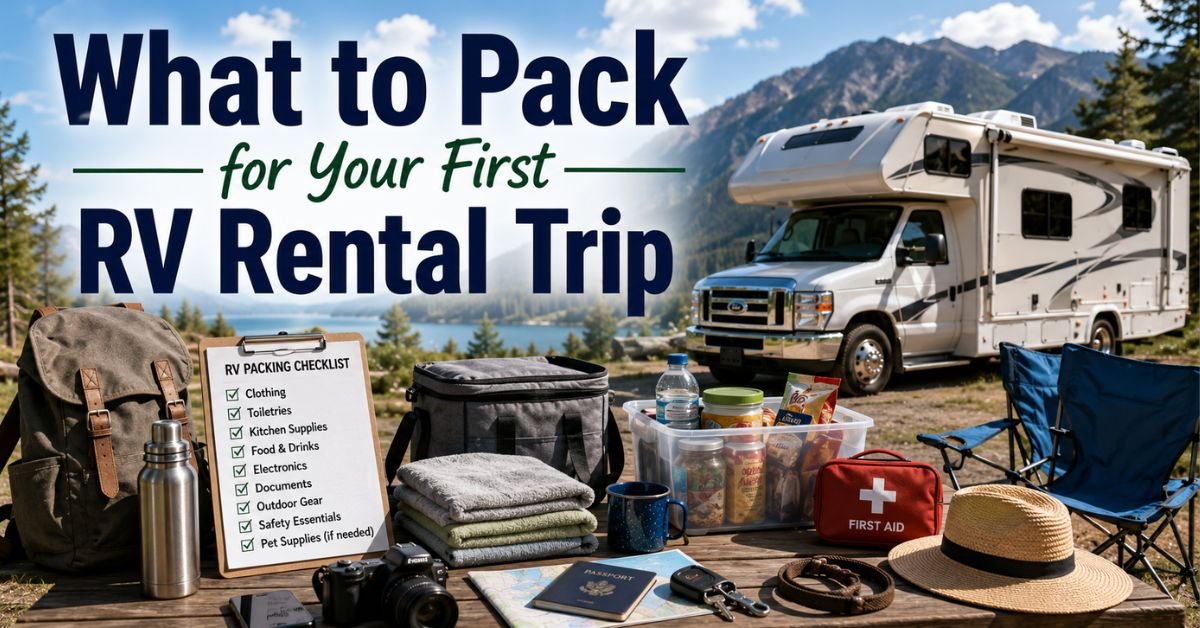
You need space for clothing, food, toiletries, electronics, camping equipment, and other personal belongings.
Make a Packing List
Before booking, create a basic packing list. Think about what each traveller needs and whether you will bring additional equipment.
If you plan to carry bicycles, sports equipment, outdoor furniture, coolers, or other bulky items, check whether the RV has suitable storage.
Avoid Overpacking
An RV may look spacious in photographs, but available storage can be smaller than expected.
Avoid bringing items you do not need. Too much luggage can reduce living space and make the vehicle feel crowded.
When comparing an RV rental, consider both interior storage and exterior storage compartments.
8. Consider the RV’s Size and Your Driving Experience
Driving an RV can feel very different from driving a regular car. The vehicle may be longer, wider, taller, and heavier.
If you have never driven an RV before, choosing the right size is particularly important.
Think About Your Comfort Level
A smaller campervan may be easier for a first-time renter to drive. A large motorhome can provide more space but may require greater awareness when turning, reversing, changing lanes, and parking.
Before booking, check the vehicle’s dimensions.
Pay attention to:
- Overall length
- Width
- Height
- Weight
- Turning radius
- Clearance requirements
Consider Parking
Large RVs may not fit into every car park or campsite.
If your trip includes busy cities, tourist attractions, restaurants, or smaller towns, consider how easy it will be to park the vehicle.
Your route should influence your RV choice. A smaller RV may provide greater flexibility if you expect to spend considerable time in urban areas.
9. Check Rental Rules and Policies
Every RV rental provider can have different rules. Reading these policies before booking can help you avoid additional charges or restrictions.
Pet Policy
If you plan to travel with a dog or another pet, confirm that the vehicle allows pets.
Some RVs may charge an additional pet fee, while others may have restrictions on specific animals.
Smoking Policy
Many rental vehicles have strict no-smoking rules. Violating the policy can result in additional cleaning charges.
Additional Drivers
If more than one person will drive the RV, check whether additional drivers need to be registered.
There may also be age or licence requirements.
Cancellation Policy
Travel plans can change. Before making a reservation, understand the cancellation and refund policy.
Check:
- Cancellation deadlines
- Refund amounts
- Modification rules
- Date-change policies
- Deposit conditions
Knowing these details before booking can give you greater flexibility if your plans change.
10. Read Reviews and Inspect the Vehicle
Customer reviews can provide valuable information that may not appear in the rental description.
Before booking an RV rental, look for reviews that discuss:
- Vehicle cleanliness
- Vehicle condition
- Owner communication
- Pickup experience
- Return process
- Accuracy of the listing
- Mechanical issues
- Comfort
- Overall rental experience
Look for Patterns
One negative review does not necessarily mean the RV is a bad choice. Instead, look for repeated complaints or consistent positive feedback.
If several customers mention the same problem, take it seriously.
Inspect the RV at Pickup
If possible, inspect the vehicle carefully before starting your trip.
Check the exterior for existing damage and make sure any issues are documented according to the rental provider’s procedures.
Inside the RV, check appliances, lights, doors, windows, beds, kitchen equipment, bathroom facilities, and other important features.
If you notice something that does not match the rental description, ask about it before leaving.
What to Ask Before Booking an RV Rental
If you are unsure about any part of the rental agreement, ask the provider before making your reservation.
Some useful questions include:
What Is Included in the Rental Price?
Ask about mileage, kitchen equipment, bedding, cleaning, insurance, and other included features.
Are There Additional Fees?
Request a complete breakdown of potential charges.
How Much Is the Security Deposit?
Ask when the deposit is collected and under what conditions it is refunded.
Is Mileage Unlimited?
If not, ask about the included mileage and additional-mile charges.
What Happens If the RV Breaks Down?
Understand the provider’s roadside assistance and breakdown procedures.
Can I Take the RV Across State or Regional Borders?
If your road trip crosses different states, regions, or countries, check whether there are any restrictions.
Are Pets Allowed?
Confirm the pet policy and any related fees.
What Happens During Pickup?
Ask how long the handover takes and whether you will receive an orientation on the RV’s systems.
How to Compare Different RV Rental Options
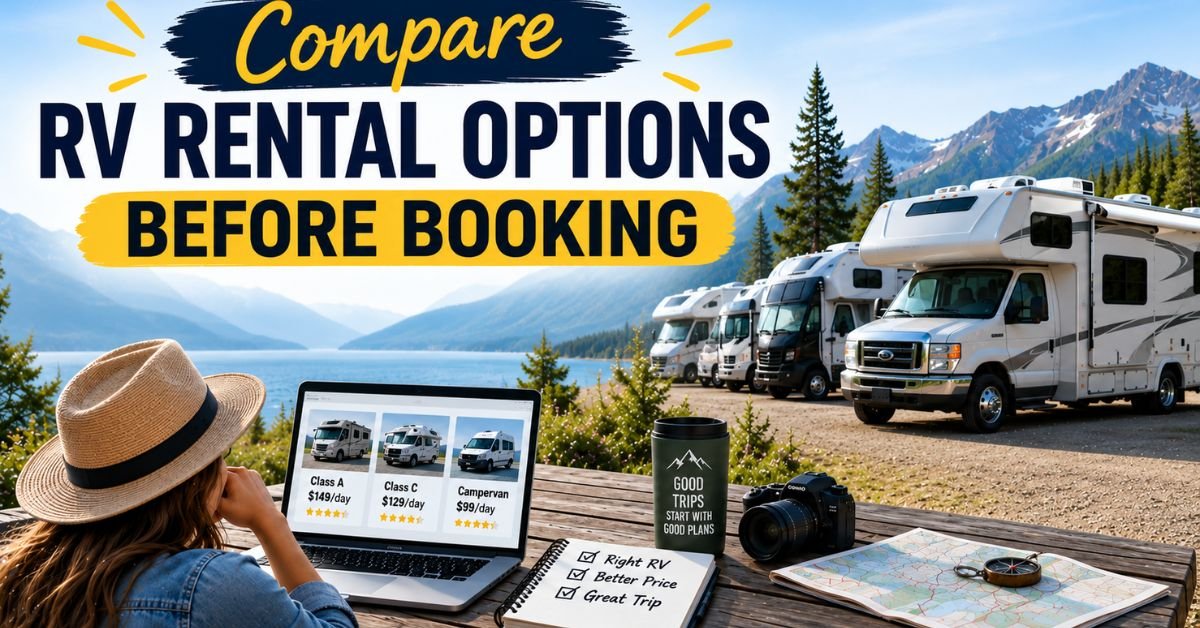
Once you have shortlisted several vehicles, create a simple comparison.
| Feature | RV Option 1 | RV Option 2 | RV Option 3 |
|---|---|---|---|
| Daily price | Compare | Compare | Compare |
| Sleeping capacity | Compare | Compare | Compare |
| Mileage | Compare | Compare | Compare |
| Insurance | Compare | Compare | Compare |
| Kitchen | Compare | Compare | Compare |
| Bathroom | Compare | Compare | Compare |
| Storage | Compare | Compare | Compare |
| Vehicle size | Compare | Compare | Compare |
| Extra fees | Compare | Compare | Compare |
| Customer reviews | Compare | Compare | Compare |
This simple approach can make the booking process much easier.
The goal is not necessarily to find the cheapest RV rental. The goal is to find the vehicle that offers the best combination of comfort, features, flexibility, and total cost for your specific trip.
How to Save Money When Booking an RV

You can often reduce your overall RV trip budget by making a few smart decisions.
Compare Several Vehicles
Do not immediately book the first RV you find. Compare multiple vehicles and rental providers.
Look at the complete price rather than just the nightly rate.
Travel During Less Busy Periods
Peak travel periods can increase demand and rental prices. If your schedule is flexible, travelling during shoulder or off-peak periods may provide more affordable options.
Choose the Right Size
A larger RV is not always necessary.
If you are travelling with two people, a compact campervan may provide everything you need at a lower overall cost than a large motorhome.
Plan Your Route
Unnecessary driving increases fuel and mileage costs.
Plan your main route before booking and estimate the total distance.
Cook Some Meals
If the RV includes a kitchen, buying groceries and preparing some meals can reduce food costs during the trip.
Check Long-Term Discounts
Some rental providers offer discounts for longer bookings. If you are travelling for a week or more, check whether a weekly or extended rental rate is available.
FAQs:
Understanding common mistakes can make your booking experience much easier.
Choosing Based Only on Price
The cheapest daily rate may not be the cheapest overall option. Additional mileage, insurance, cleaning, and other fees can increase the final price.
Choosing an RV That Is Too Small
Saving money is useful, but an RV that is too small can become uncomfortable during a long journey.
Make sure there is enough sleeping space, storage, and living area for your group.
Choosing an RV That Is Too Large
A large vehicle may provide more comfort but can be difficult to drive and park.
Choose a size you can handle confidently.
Ignoring the Mileage Policy
Always check mileage before booking. Long road trips can quickly exceed a limited mileage allowance.
Not Reading the Rental Agreement
Do not skip the terms and conditions. Important details about insurance, deposits, cancellation, pets, mileage, and additional fees may be included there.
Forgetting About Fuel Costs
Fuel can become a major part of the budget, especially for large motorhomes.
Estimate your fuel expenses before finalising your reservation.
Final RV Rental Booking Checklist
Before you confirm your reservation, make sure you have checked the following:
- RV type and model
- Number of travellers
- Sleeping capacity
- Bed sizes and layout
- Kitchen facilities
- Bathroom facilities
- Storage space
- Vehicle dimensions
- Driving requirements
- Mileage allowance
- Fuel costs
- Insurance coverage
- Security deposit
- Cleaning fees
- Generator fees
- Pet policy
- Additional driver policy
- Cancellation policy
- Pickup and return arrangements
- Campsite compatibility
- Customer reviews
- Breakdown and roadside assistance
Must Read:
- How Much Does an RV Rental Cost? A Complete Guide
- How to Choose the Right RV Rental for Your Road Trip?
- How to Book Train Tickets Online: A Complete Guide
Final Thoughts:
Booking an RV can be an excellent way to enjoy a flexible road trip, but the best experience starts with choosing the right vehicle. Before making a reservation, take time to understand the RV type, sleeping capacity, rental price, mileage policy, insurance, amenities, storage, driving requirements, rental rules, and customer reviews.
The most important thing to remember is that an RV rental should match your trip rather than simply match your budget. A compact campervan may be ideal for a couple exploring cities and scenic roads, while a larger Class C or Class A motorhome may be more suitable for a family travelling for several weeks.
Always look beyond the advertised daily rate. Calculate the expected rental price, fuel, mileage, insurance, campground costs, deposits, and additional fees. This will give you a much clearer idea of what your trip is likely to cost.
You should also read the rental agreement carefully and ask questions before booking. Understanding the policies in advance can help you avoid unexpected charges and make the pickup and return process smoother.
Whether this is your first RV trip or you have rented one before, careful preparation can make a major difference. Compare your options, choose a vehicle that you can comfortably drive, check the features you actually need, and plan your route before you book.
With the right preparation, an RV rental can provide the freedom, comfort, and flexibility to make your next road trip more enjoyable from the first mile to the final destination.