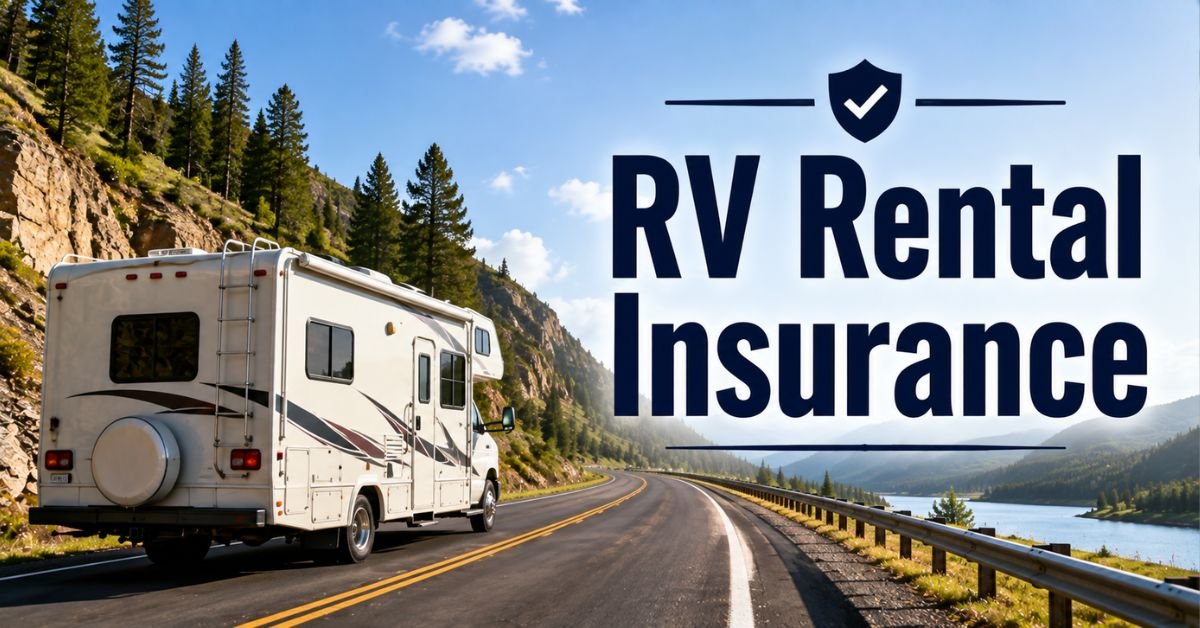
Planning an RV road trip can be exciting, but understanding RV rental insurance should be part of your preparation before you pick up the vehicle. An RV is much larger and more expensive than a typical passenger car, and an accident, theft, weather event, or damage at a campsite can create significant costs if you do not have appropriate protection.
Many travellers assume their existing car insurance or homeowners insurance automatically covers an RV rental. That is not always the case. Coverage depends on your policy, the type of RV, the rental company, where you travel, and the specific terms of the insurance agreement. Some personal auto policies may extend certain coverage to a rented motorhome, while others may not. Rental companies may also offer temporary protection specifically designed for their vehicles.
Understanding RV rental insurance before booking can help you identify gaps in coverage and avoid unexpected expenses. You should know what protects the rented RV, what covers injuries or property damage to other people, what happens if your belongings are stolen, and whether roadside assistance or emergency expenses are included.
This guide explains the main types of RV rental insurance, what each coverage generally does, what may not be covered, and what to check before starting your road trip.
What Is RV Rental Insurance?
RV rental insurance is temporary insurance protection designed for people using a rented motorhome, campervan, or other recreational vehicle. Depending on the policy, it can provide protection for damage to the rented RV and liability for injuries or property damage you may cause to others.
Rental companies may include insurance in the rental price or offer it as an additional option. Coverage limits, deductibles, exclusions, and available protections vary by provider.
Why RV Rental Insurance Matters
An RV combines transportation with living space. A motorhome can have appliances, furniture, built-in equipment, plumbing, electrical systems, awnings, and other features that a normal car does not have.
That means an accident is not the only potential source of damage. A storm could damage the vehicle, a cooking accident could cause a fire, or you could accidentally hit a campsite structure while parking.
A suitable RV rental insurance policy can help reduce your financial exposure when a covered incident occurs.
Is RV Rental Insurance Required?
The answer depends on the vehicle, location, rental agreement, and applicable insurance requirements.
For motorhomes, liability insurance is required by law in nearly every U.S. state. Travel trailers work differently because the towing vehicle generally provides the road liability coverage.
A rental company can also require you to purchase or maintain specific coverage before allowing you to take the RV.
Because requirements vary, do not assume that a particular type of coverage is automatically required or automatically included. Check the rental agreement and confirm the requirements with the rental provider and your insurer.
What Does RV Rental Insurance Usually Cover?
The exact protection depends on the policy, but RV rental insurance can include several important types of coverage.
Common areas to check include:
- Liability coverage
- Collision coverage
- Comprehensive coverage
- Medical payments coverage
- Personal belongings coverage
- Vacation liability
- Roadside assistance
- Emergency expense coverage
- Uninsured or underinsured motorist protection
Not every rental policy includes all of these options.
Liability Coverage for an RV Rental
Liability is one of the most important parts of RV rental insurance.
What Does Liability Insurance Cover?
Liability coverage generally helps when you are legally responsible for injuries to another person or damage to someone else’s property.
For example, imagine you are driving a motorhome and accidentally hit another vehicle. If you are responsible for the accident, liability coverage may help pay for covered bodily injury and property damage, subject to the policy limits.
Liability coverage can also become important when you are driving a large vehicle because the potential property damage from an accident can be substantial.
Bodily Injury Liability
Bodily injury liability can help cover medical expenses and other covered costs resulting from injuries you cause to another person in an accident.
The policy will have specific limits.
For example, a liability limit expressed as 20/40/20 generally refers to:
- $20,000 bodily injury per person
- $40,000 bodily injury per accident
- $20,000 property damage per accident
The exact minimum limits depend on state law and the policy.
Property Damage Liability
Property damage liability can help cover damage you cause to another person’s property.
That could include another vehicle, fence, building, campsite structure, or other property.
Before booking an RV rental, check the liability limits rather than simply confirming that “liability insurance” is included.
Collision Coverage
Collision coverage is designed to address damage to the rented RV caused by a collision with another vehicle or object, depending on the policy terms.
For example, you could accidentally:
- Hit another vehicle
- Strike a fence
- Back into a tree
- Hit a guardrail
- Damage the RV while parking
Collision coverage may help pay for covered repairs, subject to the policy’s deductible and limits.
Why Collision Coverage Matters
Driving an RV can take some practice. The vehicle may be longer, wider, and taller than the car you normally drive.
Parking areas, fuel stations, narrow roads, and campsites can create additional manoeuvring challenges.
Even an experienced driver can make a mistake while reversing or turning.
Collision protection can therefore be an important part of RV rental insurance, particularly when renting a larger motorhome.
Comprehensive Coverage
Comprehensive coverage generally protects against certain losses that are not caused by a collision.
Depending on the policy, covered events can include:
- Theft
- Vandalism
- Fire
- Hail
- Wind
- Lightning
- Certain weather-related damage
- Falling objects
- Contact with animals
- Broken glass in covered circumstances
Progressive describes comprehensive coverage as protection against events beyond your control, while collision coverage addresses damage resulting from collisions with vehicles or objects.
Why Comprehensive Coverage Is Useful
An RV can be damaged even when it is parked.
For example, imagine your rented motorhome is parked at a campsite when a severe storm causes damage. Collision coverage would generally not be designed for this type of loss, while comprehensive coverage may apply if the event is covered under the policy.
The exact terms always matter, so read the policy carefully.
Medical Payments Coverage
Medical payments coverage may help with certain medical expenses for you and your passengers after a covered accident.
The availability and terms vary by policy and location.
This type of protection can be useful because an accident can result in medical costs even when liability is disputed or another type of coverage is involved.
Before selecting RV rental insurance, check whether medical payments coverage is included and understand its limit.
Personal Belongings Coverage
Your RV will probably contain personal belongings during your trip.
These could include:
- Clothing
- Laptops
- Smartphones
- Cameras
- Tablets
- Camping equipment
- Personal documents
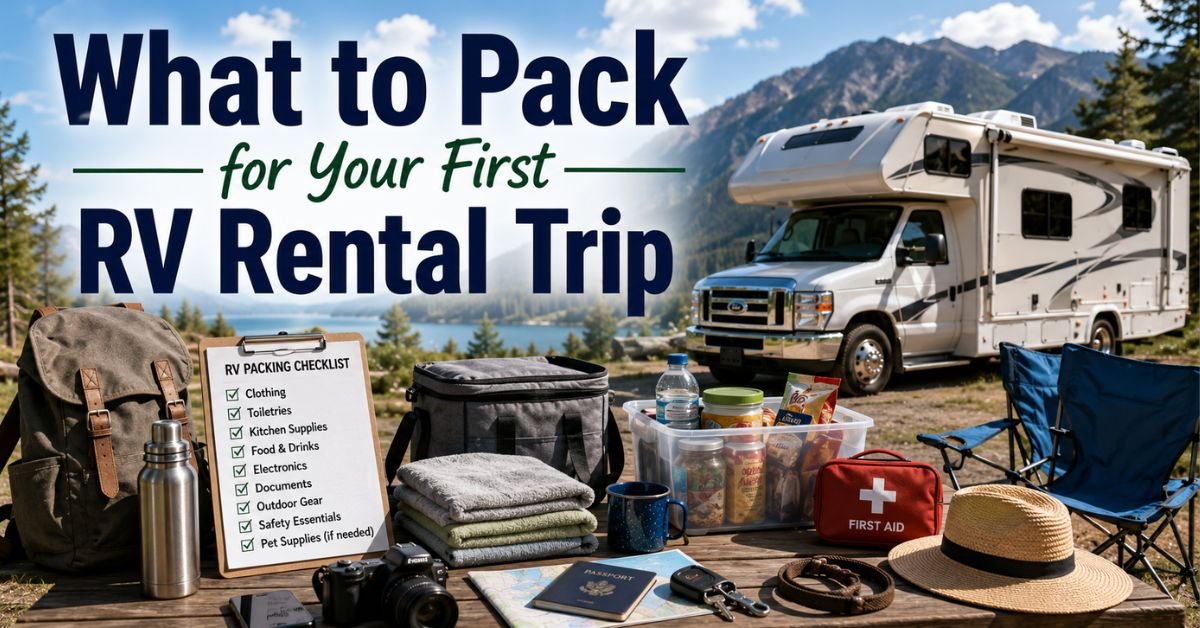
- Luggage
Your RV rental insurance may or may not cover these items.
Some RV insurance policies offer personal effects or personal property coverage, while homeowners or renters insurance may sometimes provide protection for belongings away from the home, subject to policy terms and limits.
Check Your Homeowners or Renters Policy
Do not assume that your homeowners or renters insurance covers everything inside a rented RV.
Ask your insurer whether personal belongings are covered while travelling and whether there are limits for property kept outside your home.
Also check whether theft from the RV is treated differently from theft at your primary residence.
Vacation Liability Coverage
Vacation liability is different from standard driving liability.
It can provide protection for certain injuries or property damage involving your rented RV while it is parked at a campsite or being used as temporary accommodation.
For example, imagine a guest trips near your parked RV and claims that you were responsible for the injury.
Depending on the policy, vacation liability coverage may provide protection for certain situations that are not directly related to driving.
This can be particularly relevant for travellers who plan to spend several days at campgrounds rather than simply using the RV as transportation.
Uninsured and Underinsured Motorist Coverage
Another type of protection to investigate is uninsured or underinsured motorist coverage.
This can help in certain situations where another driver causes an accident but does not have enough insurance to cover the resulting injuries or damages.
Availability and legal requirements vary by state.
When reviewing RV rental insurance, ask whether this coverage applies to your rental and what limits are available.
Roadside Assistance
Roadside assistance is not the same as insurance, but it can be a valuable addition to an RV rental package.
Depending on the plan, roadside assistance may help with situations such as:
- Mechanical breakdown
- Flat tyre
- Dead battery
- Lockout
- Towing
- Certain roadside emergencies
The exact services vary.
Why Roadside Assistance Matters
An RV breakdown can be more complicated than a standard car problem.
A large motorhome may require specialised towing equipment, and a breakdown far from a major town can disrupt your entire itinerary.
Before booking an RV rental, ask whether roadside assistance is included or available as an optional service.
Emergency Expense Coverage
Some RV insurance policies offer emergency expense protection when a covered problem makes the RV unusable during a trip.
Depending on the policy, this may help with certain costs such as temporary accommodation or transportation.
For example, if your rented RV becomes unusable because of a covered incident far from home, emergency expense coverage could provide assistance subject to the policy’s limits and conditions.
Do not assume this coverage is automatically included. Ask the rental provider or insurer.
Does Your Car Insurance Cover an RV Rental?
This is one of the most important questions to ask before booking.
The answer is: sometimes, but you should not assume it does.
Some auto policies may extend certain coverage to a rented motorhome. Allstate notes that some auto policies may extend liability, collision, and comprehensive coverage to a rented motorhome, depending on the policy.
However, Progressive states that its personal auto or RV policy typically does not extend to a rented motorhome and that temporary coverage through the rental company may be needed.
These differences demonstrate why you should check your own policy rather than relying on general assumptions.
Ask Your Insurance Company
Before picking up your RV rental, ask your insurer:
- Does my policy cover rented motorhomes?
- Does it cover travel trailers?
- What liability limits apply?
- Is collision coverage included?
- Is comprehensive coverage included?
- Does coverage apply to the entire rental period?
- Does it cover all authorised drivers?
- What deductible applies?
- Are there vehicle-size restrictions?
- Are there exclusions for RV use?
Request the answers in writing if possible.
Does Homeowners Insurance Cover an RV Rental?
Homeowners insurance may provide some protection for personal belongings inside a rented RV, but it generally should not be treated as a replacement for dedicated RV rental insurance.
For example, certain homeowners policies may cover personal property away from the home, but protection for the rented RV itself and motor-vehicle liability can be limited or excluded.
What About Stolen Belongings?
If someone steals your laptop or clothing from the rented RV, your homeowners or renters policy may potentially provide some protection, depending on the circumstances and policy limits.
Check:
- Off-premises property limits
- Deductible
- Theft exclusions
- High-value item limits
- Documentation requirements
Do not wait until something is stolen to find out what your policy covers.
Rental Company Insurance vs. Your Existing Insurance
You may have two potential sources of protection:
Option 1: Coverage through your existing auto or homeowners policy.
Option 2: Temporary RV rental insurance offered by the rental company.
The right choice depends on your existing coverage, the rental company’s requirements, the RV type, and the risks you want covered.
Why Rental Company Coverage Can Be Convenient
Rental company insurance is designed specifically around the rental vehicle and may simplify the process.
The policy may be structured to cover the rented RV and provide liability protection during the rental period.
However, you still need to review the limits, exclusions, deductibles, and conditions.
Why You Should Compare Both Options
Do not automatically purchase duplicate coverage without checking what you already have.
At the same time, do not reject rental insurance simply because you have car insurance.
The important question is:
Which policy provides the protection you actually need for this specific RV and trip?
What RV Rental Insurance May Not Cover
Understanding exclusions is just as important as understanding coverage.
Depending on the policy, RV rental insurance may not cover:
- Normal wear and tear
- Mechanical problems unrelated to a covered event
- Intentional damage
- Certain unauthorised drivers
- Personal belongings beyond policy limits
- Certain off-road use
- Prohibited activities
- Damage caused by violating the rental agreement
- Certain water-related or weather-related events
- Damage resulting from improper operation
These are examples rather than a universal list.
Every insurance policy has its own exclusions.
Read the Exclusions Carefully
For example, a rental agreement might restrict:
- Driving on unpaved roads
- Towing another vehicle
- Taking the RV into certain areas
- Using the RV for commercial purposes
- Allowing unauthorised drivers
If you violate a rental condition, coverage could be affected.
Always read the rental agreement before starting your trip.
How Much Does RV Rental Insurance Cost?
The cost of RV rental insurance varies according to the vehicle, location, rental duration, coverage limits, deductible, and insurance provider.
Some rental arrangements bundle insurance into the daily rental rate. Progressive cites a reported range of roughly $15 to $30 per day for RV rental insurance, while noting that actual costs depend on factors such as vehicle size, model, and coverage limits.
Treat this as a general reference rather than a guaranteed price.
What Can Affect the Price?
Factors can include:
- RV type
- Vehicle value
- Rental location
- Trip duration
- Driver history
- Coverage limits
- Deductible
- Selected optional protections
- Rental company requirements
A large motorhome with extensive protection can cost more to insure than a smaller campervan or trailer.
How to Choose the Right RV Rental Insurance
Choosing the right RV rental insurance starts with identifying the risks you need to protect against.
Step 1: Identify the RV Type
Is it a:
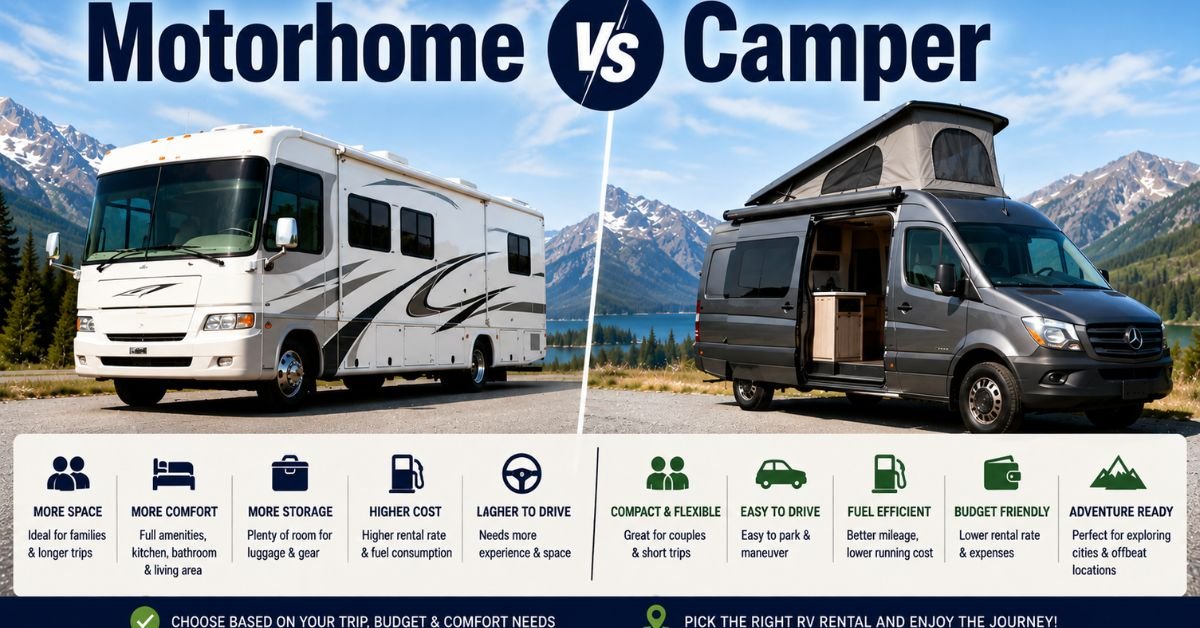
- Class A motorhome?
- Class B campervan?
- Class C motorhome?
- Travel trailer?
- Fifth-wheel trailer?
Insurance requirements and coverage can differ between motorised and towable RVs.
Step 2: Check Your Existing Insurance
Contact your auto, homeowners, or renters insurer.
Ask exactly what coverage applies to the rental.
Step 3: Review the Rental Company’s Insurance
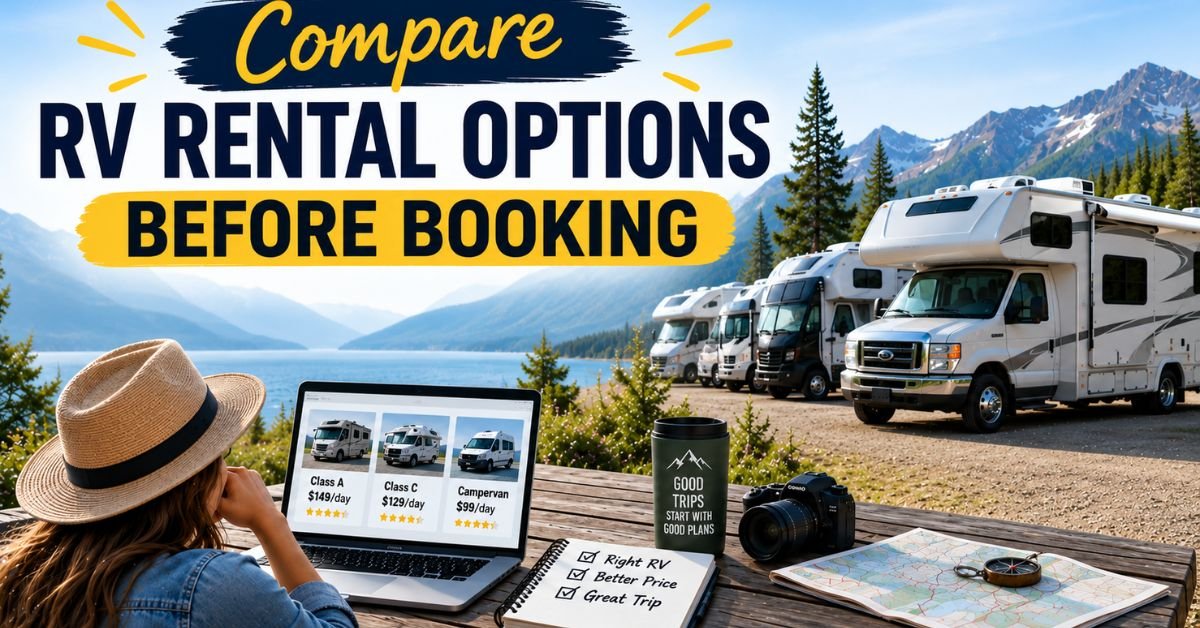
Compare the rental company’s policy with your existing protection.
Look at liability limits, deductibles, collision, comprehensive, personal property, and exclusions.
Step 4: Check the Deductible
A deductible is the amount you may have to pay toward a covered loss before insurance pays the remaining eligible amount.
A lower deductible may mean a higher premium, while a higher deductible can reduce the insurance cost.
Choose an amount you could realistically afford if something goes wrong.
Step 5: Check the Liability Limits
Do not look only at whether liability insurance exists.
Check the actual limits.
Higher limits can provide more protection when available and appropriate for your circumstances.
RV Rental Insurance Checklist
Before booking your RV rental, use this checklist:
- Confirm the RV type
- Check whether rental insurance is required
- Ask your auto insurer about rental coverage
- Check your homeowners or renters policy
- Review rental company insurance
- Compare liability limits
- Check collision coverage
- Check comprehensive coverage
- Review medical payments coverage
- Check personal belongings coverage
- Ask about vacation liability
- Check uninsured/underinsured motorist coverage
- Review roadside assistance
- Ask about emergency expenses
- Check deductibles
- Review exclusions
- Confirm authorised drivers
- Check geographic restrictions
- Read the complete rental agreement
- Keep insurance documents accessible
Questions to Ask Before Renting an RV
Before signing your rental agreement, ask the provider clear questions about RV rental insurance.
Is Insurance Included in the Rental Price?
Find out whether the advertised daily rate includes insurance or whether it is an additional charge.
What Is the Liability Limit?
Ask for the exact amount rather than simply asking whether liability coverage is available.
What Is the Deductible?
Understand how much you could have to pay if you make a claim.
Does Coverage Include Damage to the RV?
Ask whether collision and comprehensive protection are included.
Are Personal Belongings Covered?
Find out whether your luggage, electronics, clothing, and other personal items are protected.
Are All Drivers Covered?
Make sure every person who will drive the RV is properly authorised and insured.
Are There Any Road or Usage Restrictions?
Ask whether there are restrictions involving off-road driving, towing, certain roads, or particular destinations.
Is Roadside Assistance Included?
If not, ask whether it is available separately.
FAQs:
Assuming Your Car Insurance Covers Everything
Your personal policy may provide some coverage, but it may not cover every aspect of a rented RV.
Buying Only the Cheapest Protection
The lowest-cost option may have lower limits or significant exclusions.
Compare the actual protection, not just the price.
Ignoring the Deductible
A low premium may come with a deductible that is difficult to afford.
Forgetting About Personal Belongings
The RV itself and the contents inside it can require different types of protection.
Allowing an Unauthorised Driver
Make sure anyone who drives the RV is permitted under the rental and insurance terms.
Not Reading Exclusions
Restrictions can affect whether a claim is covered.
Always read the agreement before departure.
Must Read:
- When Is the Best Time to Book an RV Rental?
- What Is Included in an RV Rental? Everything to Know
- How to Save Money on Your Next RV Rental?
Final Thoughts:
Understanding RV rental insurance is one of the most important steps before starting an RV road trip. The right protection can help you manage the financial risks associated with accidents, property damage, theft, weather events, injuries, and other unexpected situations.
The coverage you need depends on the type of RV, your existing insurance, the rental company’s requirements, your destination, and the level of financial protection you want.
At a minimum, pay close attention to liability coverage, because it can protect you when you are legally responsible for injuries or property damage to others. For the rented vehicle itself, investigate collision and comprehensive protection. Collision generally addresses covered damage caused by crashes, while comprehensive can address certain non-collision events such as theft, vandalism, fire, weather damage, and animal strikes.
Also consider medical payments, personal belongings, vacation liability, roadside assistance, and emergency expense coverage where available. These options can become valuable depending on how you plan to use your RV rental.
Most importantly, do not assume that your existing car or homeowners insurance provides complete protection. Some policies may extend certain coverage to rented motorhomes, while others may not.
Before booking, compare your existing coverage with the insurance offered by the rental company. Check liability limits, deductibles, exclusions, authorised drivers, mileage or usage restrictions, and roadside assistance.
Insurance rules also vary by state and situation, so this article should be used as general educational information rather than personal insurance or legal advice. Your insurer or a licensed insurance professional can confirm what applies to your specific trip.
With the right RV rental insurance, you can approach your road trip with a clearer understanding of the risks and costs involved. Take time to review the policy before you pick up the vehicle, keep your insurance documents available during the journey, and make sure your coverage matches the RV and the way you plan to use it.