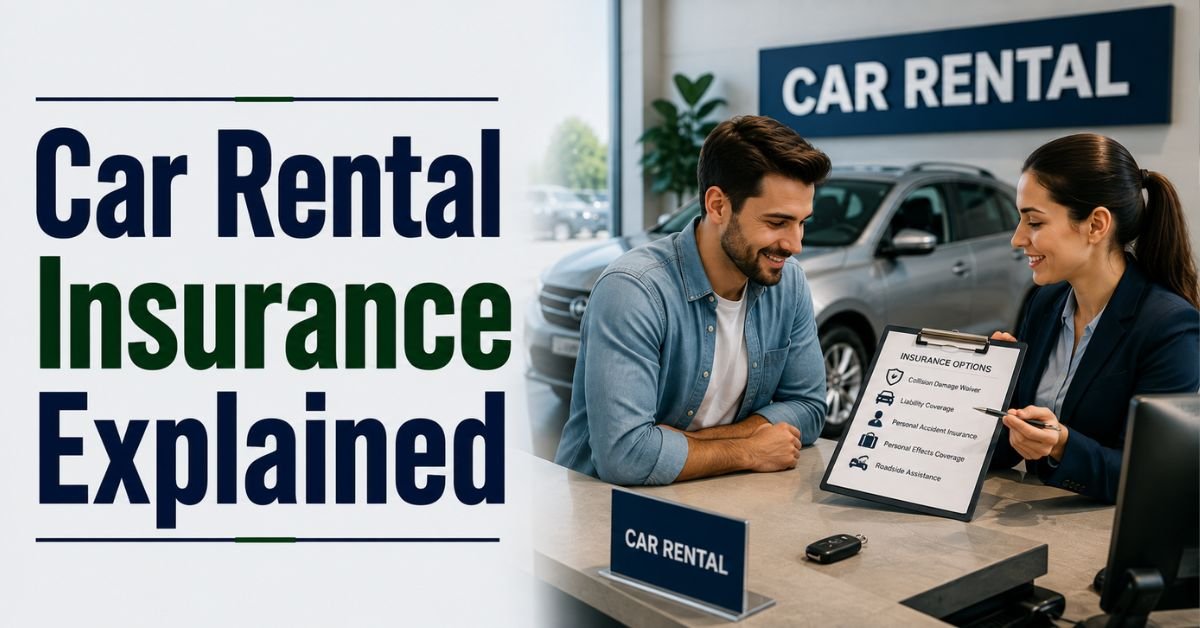
Understanding Car Rental Insurance Explained can save you from unexpected costs when you pick up a rental vehicle. Many travellers know that rental companies offer insurance and protection at the counter, but they may not understand what each option covers, whether they already have protection, or whether they actually need to purchase additional coverage.
The phrase Car Rental Insurance Explained covers several different types of protection. These can include liability insurance, Collision Damage Waiver, Loss Damage Waiver, personal accident coverage and personal effects protection. Your existing auto insurance, travel insurance, credit card or other policies may also provide certain benefits, depending on the policy terms and where you are renting the vehicle.
This is why it is important to understand your coverage before you arrive at the rental counter. Buying every option offered can significantly increase the cost of your rental, while declining protection without checking your existing coverage can leave you responsible for costs you did not expect.
In this Car Rental Insurance Explained guide, we will look at the main types of rental car protection, what they generally cover, what they may exclude and how to decide what you need.
Important: Insurance rules and coverage vary by country, state, rental company, insurer and policy. This guide is general information, not personal insurance advice. Always check your specific policy and rental agreement before making a decision.
Car Rental Insurance Explained: Why Coverage Matters
The first thing to understand about Car Rental Insurance Explained is that there is no single type of “rental car insurance” that covers everything.
Different products protect against different risks.
For example, liability insurance generally deals with injuries or property damage you cause to other people. Collision or loss damage protection generally concerns damage to the rental vehicle. Personal accident protection may cover certain injuries to the driver or passengers, while personal effects protection may apply to personal belongings stolen from the vehicle.
The National Association of Insurance Commissioners (NAIC) explains that auto insurance commonly includes liability coverage for bodily injury and property damage, while collision and comprehensive coverage address damage to the insured vehicle from different causes.
Understanding these differences is essential before accepting or declining any rental protection.
What Does Car Rental Insurance Usually Cover?
When looking at Car Rental Insurance Explained, it helps to separate the major coverage categories.
The main options you may encounter include:
- Collision Damage Waiver
- Loss Damage Waiver
- Liability insurance
- Personal Accident Insurance
- Personal Effects Coverage
- Roadside assistance
- Coverage from your personal auto policy
- Credit card rental protection
- Travel insurance coverage
These products are not interchangeable.
Collision Damage Waiver
A Collision Damage Waiver, commonly called a CDW, is one of the most frequently offered protections at rental counters.
Despite the word “waiver”, a CDW is generally not traditional insurance. It is an agreement under which the rental company waives or limits your financial responsibility for certain damage to the rental vehicle, subject to its terms and exclusions.
The FTC notes that rental companies may offer a Collision Damage Waiver or Loss Damage Waiver and that the protection may not apply in situations such as reckless driving, driving under the influence or allowing an unauthorised driver to use the vehicle.
Loss Damage Waiver
Loss Damage Waiver, or LDW, is another term you may see when reviewing Car Rental Insurance Explained.
Depending on the rental company, LDW may address damage to or loss of the rental vehicle, including certain theft situations.
The exact protection varies, so do not assume that every LDW product provides identical coverage.
Always read the agreement to understand:
- Covered damage
- Exclusions
- Deductible or excess
- Theft protection
- Glass and tyre coverage
- Administrative charges
- Loss-of-use charges
- Conditions that could invalidate the protection
What Is Rental Car Liability Insurance?
Liability coverage is one of the most important parts of Car Rental Insurance Explained because it concerns damage or injuries you may cause to other people.
Liability insurance generally covers your legal responsibility for bodily injury and property damage resulting from an accident for which you are responsible, subject to policy limits and conditions.
The NAIC explains that liability insurance generally includes bodily injury liability and property damage liability. Bodily injury liability can cover claims relating to injuries caused to another person, while property damage liability can cover damage caused to another person’s vehicle or property.
Why Liability Limits Matter
Having liability coverage does not necessarily mean every possible claim is fully covered.
Policies have limits.
For example, if your liability limit is lower than the amount of a claim, you could potentially be responsible for the difference, depending on the circumstances and applicable law.
This is why you should check the liability limits provided by your existing policy and compare them with the protection offered by the rental company.
Does Your Personal Auto Insurance Cover a Rental Car?

This is one of the most important questions in Car Rental Insurance Explained.
If you already have personal auto insurance, your policy may provide some coverage when you rent a vehicle. However, you should never assume that it automatically applies to every rental, every vehicle or every destination.
The FTC recommends checking your existing insurance policy and contacting your insurance company if you are unsure about rental coverage.
Check Your Policy Before Travelling
Before picking up your rental vehicle, ask your insurer:
- Does my policy cover rental cars?
- Does the coverage apply to this destination?
- Does it cover damage to the rental vehicle?
- Does it cover theft?
- What liability limits apply?
- What deductible or excess applies?
- Are there vehicle-type restrictions?
- Are there exclusions?
- Does coverage continue for the entire rental period?
Getting clear answers before travelling is much easier than discovering a coverage gap after an accident.
Does Collision and Comprehensive Coverage Help?
Collision and comprehensive coverage can be relevant when considering Car Rental Insurance Explained.
The NAIC describes collision coverage as protection for physical damage caused by a collision, while comprehensive coverage generally applies to non-collision events such as theft, fire, vandalism and certain weather-related damage.
If your personal auto policy extends these protections to a rental vehicle, you may already have some protection against damage to the rental car.
However, there can still be differences between your personal policy and the rental company’s waiver.
For example, your personal policy may have a deductible. The rental company’s protection may operate differently.
You should therefore compare the actual terms rather than simply assuming that “full coverage” means everything is covered.
What Is a Deductible or Excess?
A deductible, sometimes called an excess, is an important term in Car Rental Insurance Explained.
It is the amount you may have to pay toward a covered loss before the insurer or protection provider pays the remaining eligible amount.
For example, suppose a policy has a $1,000 deductible and you have a covered $2,500 loss. Depending on the policy terms, you may be responsible for the first $1,000 and the insurer may cover the remaining eligible amount.
The actual rules vary, so check your policy.
Why the Deductible Matters
Two rental options can appear similar but create very different financial exposure.
A cheaper protection option with a high deductible may leave you responsible for a substantial amount after an accident.
A more expensive option with lower financial exposure may be preferable for some travellers.
Your decision should therefore consider both the premium and the potential out-of-pocket cost.
What Is Personal Accident Insurance?
Personal Accident Insurance, sometimes called PAI, may be offered by rental companies.
It can provide certain benefits for the renter and passengers if they suffer covered injuries resulting from a rental vehicle accident.
The NAIC notes that Personal Accident Insurance can provide coverage for medical bills resulting from a car crash involving the renter and passengers, although whether you need it depends on other coverage you already have.
Do You Already Have Similar Protection?
Before buying PAI, check whether you already have:
- Health insurance
- Personal injury protection
- Medical payments coverage
- Travel insurance
- Other applicable accident coverage
The terms and exclusions are important, so compare the policies rather than assuming that one automatically replaces another.
What Is Personal Effects Coverage?
Personal Effects Coverage is another option that may appear when reviewing Car Rental Insurance Explained.
This protection generally concerns personal belongings inside the rental vehicle if they are stolen, subject to the policy terms.
The NAIC notes that homeowners or renters insurance may already provide coverage for personal belongings, depending on the policy.
Check Your Home or Renters Insurance
If you already have homeowners or renters insurance, check whether your personal belongings are covered while travelling.
Pay attention to:
- Coverage limits
- Deductibles
- Theft conditions
- Valuable-item limits
- Exclusions
- Geographic restrictions
You may already have protection, but the details matter.
What About Credit Card Rental Car Insurance?

Credit card benefits are another important part of Car Rental Insurance Explained.
Some credit cards offer rental vehicle protection when you use the card to pay for the rental, but the conditions can be strict.
The FTC notes that some credit cards may provide Collision Damage Waiver protection and that eligibility can depend on declining the rental company’s coverage.
The NAIC also advises consumers to contact their credit card company to understand rental protection benefits because these benefits can be subject to specific conditions and may be secondary to other coverage.
What to Ask Your Credit Card Provider
Before relying on credit card coverage, confirm:
- Does the card cover rental vehicles?
- Is coverage primary or secondary?
- How long does coverage last?
- Which countries are covered?
- Which vehicle types are excluded?
- Is theft covered?
- Is damage covered?
- Are tyres and glass covered?
- Are administrative fees covered?
- Must you pay the full rental with the card?
- Must you decline the rental company’s CDW?
- Do you need to enrol before renting?
Do not rely on a general statement such as “my credit card has rental insurance.” Get the actual terms.
What Does Travel Insurance Cover?
Travel insurance may also include certain rental vehicle benefits, but coverage varies significantly between policies.
Some travel insurance products may offer rental vehicle damage protection or related benefits.
However, you should read the policy wording carefully.
Do not assume that a travel insurance policy automatically replaces rental car protection.
Check:
- Rental vehicle damage
- Theft
- Liability
- Deductible
- Maximum benefit
- Vehicle exclusions
- Country restrictions
- Rental duration limits
- Claims procedure
Travel insurance can be useful, but it should be compared carefully with the protection offered by the rental company and your existing insurance.
Do You Need to Buy Insurance at the Rental Counter?
There is no universal answer, which is why Car Rental Insurance Explained needs to focus on your existing coverage rather than simply recommending or rejecting rental protection.
The FTC advises consumers to check their existing insurance before buying additional rental coverage.
If your personal auto insurance, credit card or another policy already provides suitable protection, buying every option at the counter may result in unnecessary duplication.
On the other hand, if you have little or no existing coverage, rental-company protection may be worth considering.
When Additional Protection May Be Useful
Additional protection may be worth considering when:
- You do not have personal auto insurance
- Your existing policy excludes rental vehicles
- Your coverage has a high deductible
- You are travelling somewhere your policy does not cover
- Your credit card has limited protection
- You want to reduce financial exposure
- You are renting a vehicle that falls outside your normal policy
The decision should be based on the actual terms and your ability to handle potential costs.
What If You Do Not Own a Car?
People who do not own a car should pay particular attention to Car Rental Insurance Explained.
If you do not have a personal auto policy, you may not have the same rental protection as someone who regularly insures a vehicle.
The NAIC notes that people who do not own a car may want to consider a non-owner auto insurance policy, while also considering rental-company liability and collision protection if other coverage is unavailable.
Before travelling, compare the available options instead of waiting until you reach the rental counter.
What Does Car Rental Insurance Usually Not Cover?
Understanding exclusions is just as important as understanding what is covered.
A protection product may have exclusions for situations such as:
- Reckless driving
- Driving under the influence
- Unauthorised drivers
- Certain prohibited roads
- Certain vehicle types
- Intentional damage
- Breach of the rental agreement
The FTC specifically notes that rental-company CDW protection can be cancelled or become unavailable in situations such as reckless driving, driving under the influence or allowing an unauthorised driver to operate the vehicle.
Always read the rental agreement for the exact exclusions.
Does Insurance Cover Tyres and Glass?
Do not automatically assume that every rental protection plan covers tyres, wheels, glass or windscreen damage.
These components may have separate exclusions or conditions.
Before choosing protection, ask whether it covers:
- Windscreen
- Side windows
- Tyres
- Wheels
- Undercarriage
- Roof
- Mirrors
If these items are excluded, you may have additional financial exposure even when other vehicle damage is covered.
What About Roadside Assistance?
Roadside assistance is different from insurance, although rental companies may present it alongside other protection options.
It can help with certain problems such as:
- Flat tyres
- Dead batteries
- Lockouts
- Lost keys
- Mechanical problems
The FTC notes that roadside assistance may already be included in some rental agreements or may be available through an auto club, credit card or personal auto policy.
Before paying for roadside assistance, check whether you already have it elsewhere.
Read the Rental Agreement Carefully
The rental agreement is one of the most important documents in Car Rental Insurance Explained.
Before signing, review:
Coverage
Check what protection you have accepted or declined.
Exclusions
Understand what circumstances can invalidate protection.
Deductible
Know how much you could be responsible for after a covered incident.
Additional Charges
Check whether the agreement allows charges for towing, administrative services, loss of use or other expenses.
Authorised Drivers
Make sure everyone who will drive the vehicle is properly authorised.
Allowing an unauthorised driver to use the vehicle can create coverage problems.
How Much Does Car Rental Insurance Cost?

The price of rental protection varies depending on the rental company, vehicle, destination, coverage type and rental period.
The NAIC gives examples of typical daily charges for several rental protection products, including CDW, liability insurance, personal accident insurance and personal effects coverage, but actual prices vary and should be checked with the rental provider.
The important point is that insurance can significantly increase the total cost of a rental.
For example, if several protection options are added on a daily basis, the cost can become substantial over a week or longer.
This is why comparing your existing coverage before booking can be valuable.
A Simple Car Rental Insurance Checklist
Before collecting your rental vehicle, use this checklist.
Before Booking
- Check your personal auto insurance
- Contact your insurer if coverage is unclear
- Check your credit card benefits
- Review travel insurance
- Compare rental-company protection
- Check deductibles
- Check coverage limits
- Review exclusions
At the Rental Counter
- Confirm the coverage you are buying
- Confirm the coverage you are declining
- Ask about CDW or LDW
- Ask about liability coverage
- Ask about roadside assistance
- Check the deductible or excess
- Confirm authorised drivers
- Read the rental agreement
Before Driving Away
- Inspect the vehicle
- Photograph existing damage
- Check tyres and wheels
- Check windscreen and glass
- Record the mileage
- Record the fuel level
- Save the rental company’s emergency number
- Keep your insurance documents accessible
Common Car Rental Insurance Mistakes
Buying Every Option Without Checking Existing Coverage
One of the most common mistakes is purchasing every protection option at the counter without first checking existing insurance.
You may already have some applicable coverage.
Assuming Your Credit Card Covers Everything
Credit card protection can be valuable, but it may have exclusions and eligibility requirements.
Always check the actual benefits.
Ignoring the Deductible
A policy can provide coverage while still leaving you responsible for a significant deductible.
Assuming “Full Coverage” Means Everything
Insurance terminology varies. Ask what is actually covered and what is excluded.
Forgetting About Liability
Damage to the rental vehicle and liability for injuries or property damage to others are different issues.
Make sure you understand both.
Allowing an Unauthorised Driver
Only authorised drivers should operate the rental vehicle according to the rental agreement.
Failing to Document Existing Damage
Take photographs and make sure existing damage is recorded before leaving the rental location.
Car Rental Insurance Explained: How to Make the Right Decision
The best way to approach Car Rental Insurance Explained is to think about your existing protection first.
Start with your personal auto insurance. Find out whether rental vehicles are covered and what limits and deductibles apply.
Next, check your credit card benefits if you plan to pay for the rental with a credit card.
Then review travel insurance if you have purchased it.
Finally, compare the remaining gaps with the protection offered by the rental company.
This gives you a much clearer picture of what you actually need.
For example, you may already have damage protection through your personal auto policy but need to think carefully about liability limits. Another traveller may have no personal auto policy and therefore need more protection from the rental company.
There is no one-size-fits-all answer.
Must Read:
- What to Check Before Picking Up a Rental Car?
- How to Choose the Right Car Rental for Your Trip?
- What to Pack for Your First RV Rental Trip?
Final Thoughts:
Understanding Car Rental Insurance Explained before your trip can help you avoid unnecessary expenses and reduce the risk of being surprised after an accident or theft.
The most important point is that rental car protection comes in several forms. Collision Damage Waiver and Loss Damage Waiver generally relate to damage or loss involving the rental vehicle, while liability insurance addresses certain injuries and property damage you cause to others. Personal Accident Insurance and Personal Effects Coverage address different risks.
You may already have some protection through your personal auto insurance, homeowners or renters insurance, credit card or travel insurance. However, coverage varies, so checking the actual policy terms is essential.
Before renting, compare your existing coverage with the rental company’s options. Look closely at deductibles, limits, exclusions, authorised drivers, vehicle restrictions and geographic limitations.
Do not choose insurance simply because it is offered at the counter, and do not decline protection simply because you already have another policy. Instead, understand what each option covers and identify any gaps.
The goal of Car Rental Insurance Explained is not to tell every traveller to buy more insurance. It is to help you understand the different types of protection so you can make an informed decision based on your own circumstances.
A few minutes of research before your trip can make the rental process much clearer. Check your policies, ask questions, read the rental agreement and keep documentation of the vehicle’s condition.
That preparation can help you enjoy your journey with a better understanding of what your Car Rental Insurance does, what it does not cover and where you may still have financial responsibility.