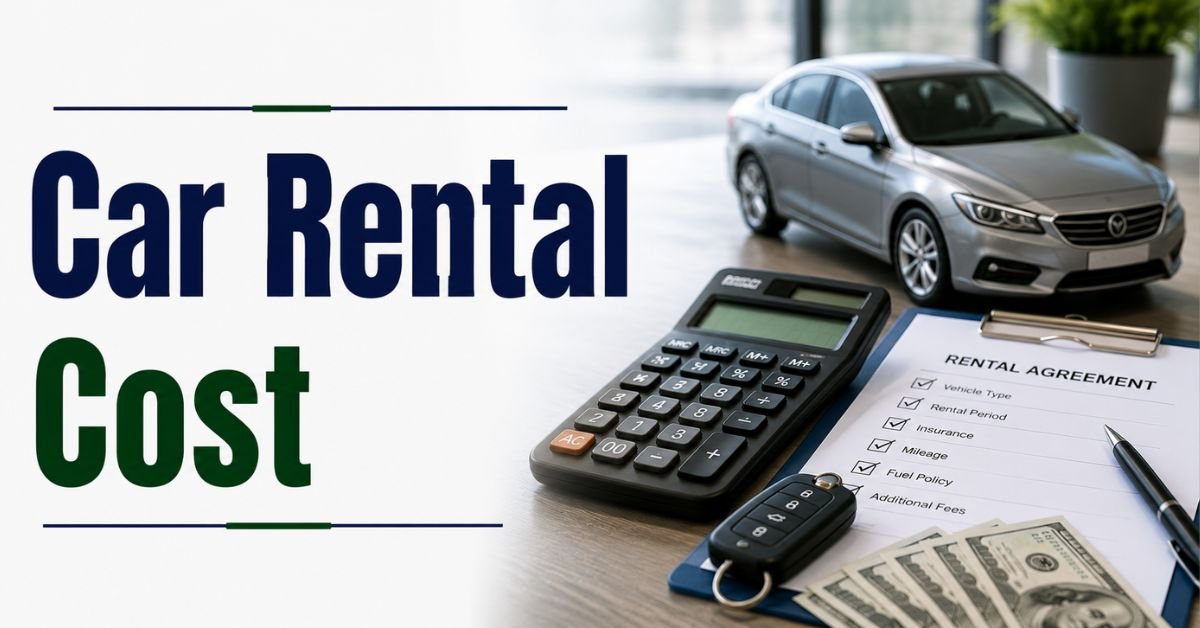
Picking up a rental car should be a simple part of your trip, but a few minutes of careful checking can prevent unexpected problems later. Knowing what to check before picking up a rental car can help you identify existing damage, confirm the rental terms, understand the fuel policy and make sure the vehicle is suitable for your journey.
Many travellers focus mainly on collecting the keys and starting their trip. However, the pickup process is an important opportunity to inspect the vehicle and confirm that everything matches the booking. A quick inspection can also give you useful evidence of the car’s condition before you drive away.
Whether you are hiring an economy car for a city break, an SUV for a family holiday or a vehicle for a long road trip, the same basic checks can help protect your time and budget.
This guide explains what to check before picking up a rental car, from documents and rental agreements to vehicle damage, tyres, fuel, mileage, safety equipment and return requirements.
Why You Should Check a Rental Car Before Driving Away
Understanding what to check before picking up a rental car starts with knowing why the inspection matters.
A rental vehicle may have been used by several customers before you. Although rental companies generally inspect and maintain their vehicles, existing scratches, dents and other marks can still be present.
Protect Yourself From Damage Disputes
The most important reason to inspect the vehicle is to identify existing damage.
Look carefully for:
- Scratches
- Dents
- Paint damage
- Cracked lights
- Damaged mirrors
- Wheel marks
- Windscreen chips
- Bumper damage
- Interior stains
- Damaged seats
If you notice damage that is not listed on the rental inspection report, ask the rental company to record it before you leave.
Taking photographs or videos can provide an additional record of the vehicle’s condition at pickup.
Confirm That the Car Matches Your Booking
Another important part of knowing what to check before picking up a rental car is confirming that the vehicle meets your requirements.
Check the:
- Vehicle category
- Number of seats
- Transmission
- Fuel type
- Luggage capacity
- Optional equipment
- Child seat, if requested
- GPS or other booked equipment
If the vehicle you receive is different from what you booked, ask the rental representative to explain the change.
Check Your Rental Documents First
Before inspecting the vehicle, review your rental documents. This gives you a clear understanding of what you have agreed to.
Check the Rental Agreement
Read the rental agreement carefully and confirm:
- Pickup date and time
- Return date and time
- Pickup location
- Return location
- Rental period
- Vehicle category
- Daily or total rental price
- Mileage allowance
- Fuel policy
- Insurance or protection
- Additional driver information
- Cancellation terms
- One-way fees
- Additional charges
The Federal Trade Commission advises consumers to understand rental costs and additional fees before signing a rental agreement. Charges can include taxes, airport fees, fuel costs, additional-driver fees and other expenses.
Check the Final Price
The advertised rental rate may not represent the complete cost.
Before accepting the vehicle, confirm the final amount and ask about any additional charges.
This is particularly important if you have added:
- Insurance
- Additional drivers
- Child seats
- GPS
- Roadside assistance
- Toll services
- Extra mileage
- One-way drop-off
Knowing the complete cost is an important part of what to check before picking up a rental car.
Inspect the Exterior of the Rental Car
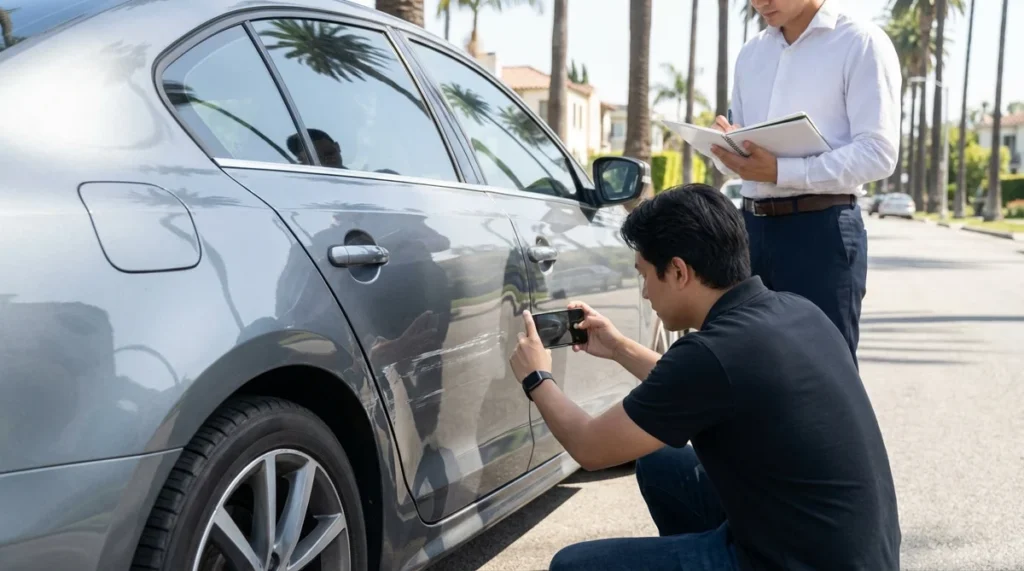
Once you have reviewed the documents, walk around the entire vehicle.
Do not inspect only the driver’s side. Damage can be located anywhere on the car.
Check the Front of the Car
Start at the front and look for:
- Scratches
- Dents
- Cracks
- Paint marks
- Damaged headlights
- Broken fog lights
- Bumper damage
- Windscreen chips
Look closely rather than simply walking around the vehicle.
Small scratches can be difficult to notice in poor lighting, so inspect the vehicle carefully.
Check Both Sides
Walk around both sides of the rental car.
Look at the doors, mirrors, panels, wheel arches and lower sections of the body.
Pay particular attention to areas that may have been damaged in parking lots.
Check the Rear
Inspect the rear bumper, boot or tailgate, rear lights and registration area.
If the vehicle has a reversing camera or parking sensors, check whether they appear to be intact.
Check the Roof
The roof is easy to overlook, but it can also have scratches or dents.
If possible and safe, inspect the roof or ask the rental representative to confirm its condition.
Photograph and Record Existing Damage
Taking photographs is one of the simplest steps when considering what to check before picking up a rental car.
Use your smartphone to take clear pictures of the entire vehicle.
Take Wide and Close-Up Photos
Start with wider photographs showing the whole vehicle. Then take close-up photographs of any scratches, dents or other damage.
Useful photographs include:
- Front view
- Rear view
- Left side
- Right side
- Wheels
- Windscreen
- Dashboard
- Fuel gauge
- Odometer
- Existing damage
Make sure the photographs clearly show the condition of the vehicle.
Record Damage Before Leaving
If you notice damage, compare it with the rental inspection report.
If the damage is not recorded, ask the rental company to update the documentation.
Do not assume that a small scratch is not important. It is better to have existing damage documented before you start driving.
Check the Tyres and Wheels
Tyres are an important safety component and should not be ignored.
Inspect the Tyres
Look for:
- Visible cuts
- Bulges
- Uneven wear
- Damaged sidewalls
- Low tyre pressure
- Foreign objects
You do not need to perform a technical inspection yourself, but visible problems should be reported to the rental company.
Check the Spare Tyre or Repair Kit
Depending on the vehicle, the rental car may have a spare tyre, tyre repair kit or emergency inflation equipment.
Ask where it is located and understand what equipment is provided.
Some modern vehicles do not include a traditional spare tyre, so knowing what is available can be useful if you experience a puncture.
Check the Windscreen and Windows
Another important part of what to check before picking up a rental car is the glass.
Look carefully at:
- Windscreen
- Side windows
- Rear window
- Mirrors
Small chips or cracks should be reported before departure.
Check that all windows open and close properly where applicable.
If the vehicle has automatic windows, test each one.
Check the Lights and Indicators
Lights are essential for safe driving, especially if you expect to drive at night or in poor weather.
Test the Main Lights
Check whether the following appear to work:
- Headlights
- Brake lights
- Indicators
- Hazard lights
- Fog lights
- Reversing lights
You may need another person to help you check some exterior lights.
If a light appears damaged or does not work, notify the rental company before leaving.
Check the Interior of the Rental Car
The interior should also be inspected before you start your journey.
Check the Seats
Look for:
- Tears
- Stains
- Broken adjustments
- Damaged seat belts
- Missing headrests
Make sure the seats can be adjusted comfortably.
Check the Seat Belts
Test the seat belts for the main seating positions you plan to use.
They should latch and release correctly.
If you are travelling with children, make sure the vehicle can accommodate the required child restraint correctly and that the equipment you requested is present.
Check the Dashboard and Warning Lights
Start the engine and look at the dashboard.
Some warning lights appear briefly during startup and then switch off. Persistent warning lights may indicate a problem that needs attention.
Pay attention to warning symbols relating to:
- Engine
- Brakes
- Tyres
- Airbags
- Battery
- Oil
- Safety systems
If a warning light remains illuminated and you are unsure why, ask the rental company before leaving.
Check the Odometer
Record the mileage or kilometres shown on the odometer.
Compare the reading with the rental documentation if mileage is listed.
Taking a photograph of the odometer is a simple way to keep a record of the vehicle’s mileage at pickup.
Check the Fuel Level
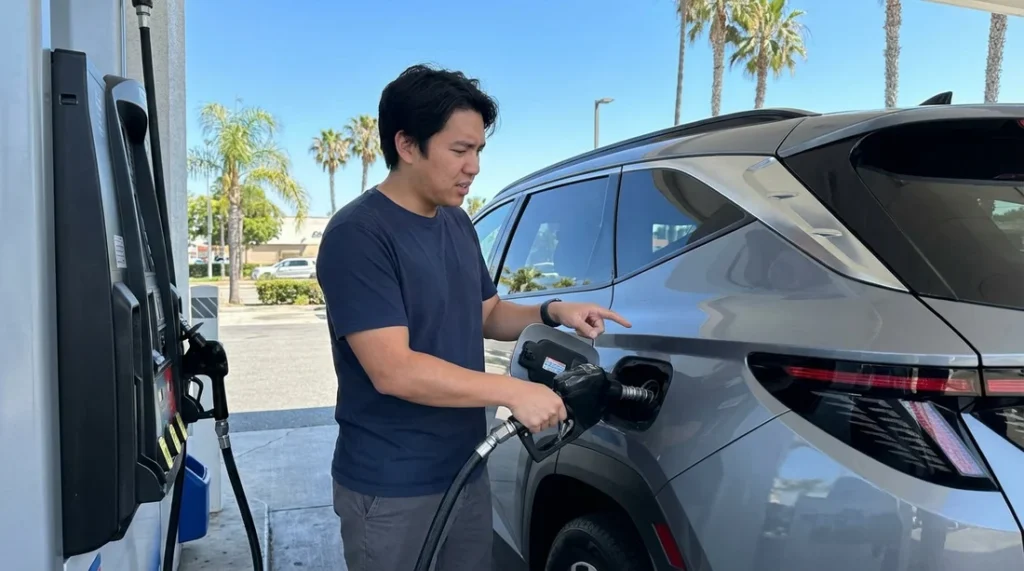
Fuel policy is one of the most important things to understand when learning what to check before picking up a rental car.
Look at the fuel gauge and compare it with the rental agreement.
Understand the Fuel Policy
Common fuel arrangements can include:
- Full-to-full
- Pre-purchased fuel
- Partial fuel arrangements
With a full-to-full policy, you generally collect the vehicle with a full tank and are expected to return it full according to the rental agreement.
The FTC notes that rental companies may charge additional amounts if the vehicle is returned without the required amount of fuel.
Take a photograph of the fuel gauge at pickup so you have a record.
Check the Mileage Policy
Mileage restrictions can affect the total cost of a rental.
Some rental agreements include unlimited mileage, while others may impose a daily or overall mileage limit.
Calculate Your Expected Driving Distance
If you are planning a road trip, estimate how far you expect to drive.
Consider:
- Airport to hotel
- Hotel to attractions
- Day trips
- Intercity travel
- Return journey
If your expected distance is high, confirm whether the rental includes unlimited mileage.
If there is a mileage limit, ask about the cost of exceeding it before you leave.
Check the Transmission and Driving Controls
Before driving away, make sure you are comfortable with the vehicle’s controls.
Automatic Transmission
If you have booked an automatic vehicle, confirm that the transmission is automatic and familiar to you.
Check the positions for:
- Park
- Reverse
- Neutral
- Drive
Manual Transmission
If you are driving a manual vehicle, make sure you understand the clutch, gear layout and parking brake.
Do not leave the rental location until you are comfortable operating the vehicle.
Check the Fuel Type
One simple but important check is confirming which fuel the rental car uses.
Look at the fuel information provided by the rental company or vehicle.
If you are unfamiliar with the local fuel names, ask the rental representative.
Putting the wrong type of fuel into a rental car can cause serious problems and potentially significant costs.
Check the Air Conditioning and Heating
Test the climate control before starting your trip.
Check whether:
- Air conditioning works
- Heating works
- Fans operate correctly
- Airflow can be redirected
- Temperature controls respond properly
This is especially important when travelling in hot or cold weather.
A comfortable cabin can make a major difference during a long journey.
Check the Infotainment and Navigation System
Modern rental cars often include touchscreen displays, Bluetooth, USB connections and navigation systems.
Test Basic Functions
Check:
- Bluetooth
- USB ports
- Audio system
- Navigation
- Touchscreen
- Backup camera
- Parking sensors
If you connect your smartphone, make sure you understand how to remove your personal information when returning the vehicle.
The FTC has warned that connected rental vehicles may retain personal information such as contacts, phone data and navigation history if travellers do not delete it before returning the car.
Check Safety Equipment
Safety equipment is another important part of what to check before picking up a rental car.
Depending on the vehicle and destination, check whether the rental includes relevant emergency equipment.
This may include:
- Warning triangle
- Reflective vest
- First-aid kit
- Spare tyre or repair kit
- Jack
- Emergency tools
- Fire extinguisher where required
Equipment requirements can vary by country and vehicle, so ask the rental company what is included.
Check the Emergency Contact Information
Before leaving the rental location, make sure you know how to contact the rental company.
Save the relevant phone number in your phone.
You may need assistance if you experience:
- Mechanical problems
- A flat tyre
- An accident
- A warning light
- Lost keys
- A locked vehicle
- A breakdown
Knowing who to contact can make an unexpected problem easier to manage.
Check the Insurance and Protection
Insurance and rental protection should be clearly understood before you drive away.
Understand Your Coverage
Check what protection is included in your agreement and whether you have additional coverage through another provider.
Important terms may include:
- Collision damage waiver
- Loss damage waiver
- Liability coverage
- Deductible or excess
- Theft protection
- Roadside assistance
Do not assume that every type of damage is automatically covered.
The FTC recommends checking existing insurance coverage before purchasing additional rental protection because your own insurance or another source may already provide certain coverage.
Ask About the Excess
Even when protection is included, there may be an excess or deductible.
Understanding this amount before driving away can prevent surprises later.
Check the Rental Company’s Return Procedure

Knowing what to check before picking up a rental car also means understanding how the vehicle must be returned.
Ask about:
- Return location
- Return time
- Fuel level
- Mileage
- Cleaning requirements
- Key return
- After-hours drop-off
- Required paperwork
If you return the car outside normal opening hours, find out exactly where to leave the keys and documents.
Check for One-Way Rental Conditions
If you are returning the rental car somewhere different from where you collected it, confirm the one-way rental conditions.
There may be a drop-off fee depending on the route and rental company.
Make sure the return location in your agreement matches your travel plans.
Ask Questions Before Leaving
If something is unclear, ask the rental representative before driving away.
Useful questions include:
- What fuel does this vehicle use?
- Is the mileage unlimited?
- What is the fuel policy?
- What damage is already recorded?
- What is the insurance excess?
- Where should I return the car?
- What happens if I return it late?
- What should I do in a breakdown?
- Is roadside assistance included?
- Are there restrictions on where I can drive?
Asking questions at pickup is much easier than trying to resolve confusion later.
Common Mistakes to Avoid at Rental Car Pickup
Knowing what to check before picking up a rental car can help you avoid several common mistakes.
Rushing Through the Inspection
Do not leave immediately just because you are tired after a flight.
Spend a few minutes checking the vehicle.
Ignoring Small Damage
Small scratches and dents should still be documented if they are not already recorded.
Forgetting to Photograph the Car
Photos can provide a useful record of the vehicle’s condition.
Not Checking the Fuel Gauge
Confirm the starting fuel level before driving away.
Ignoring Warning Lights
A persistent dashboard warning should be checked before departure.
Forgetting the Return Instructions
Know where and when the vehicle must be returned.
Not Checking the Rental Agreement
Do not rely only on what you remember from the booking page.
Review the final agreement before accepting the vehicle.
Rental Car Pickup Checklist
A simple checklist can make the pickup process much easier.
Documents and Booking
- Check your rental agreement
- Confirm pickup and return dates
- Confirm pickup and return locations
- Check the total price
- Confirm the vehicle category
- Check mileage terms
- Check the fuel policy
- Review insurance and protection
Exterior Inspection
- Check front bumper
- Check rear bumper
- Check doors and panels
- Check mirrors
- Check headlights
- Check rear lights
- Check wheels and tyres
- Check windscreen
- Photograph existing damage
Interior Inspection
- Check seats
- Check seat belts
- Check dashboard
- Check warning lights
- Record mileage
- Check fuel level
- Test air conditioning
- Test heating
- Check windows
- Test infotainment
- Check navigation and Bluetooth
Before Driving Away
- Confirm fuel type
- Save emergency contact details
- Ask about roadside assistance
- Confirm return instructions
- Check after-hours return procedures
- Make sure all existing damage is documented
Must Read:
- Car Rental vs Public Transport: Which Is Better?
- How to Choose the Right Car Rental for Your Trip?
- Motorhome vs Camper: Which RV Rental Is Right for You?
Final Thoughts:
Knowing what to check before picking up a rental car can save you time, money and unnecessary stress during your trip.
The most important steps are straightforward. Review the rental agreement, confirm the total price, understand the fuel and mileage policies, inspect the exterior and interior, check the tyres and lights, record the mileage and fuel level, photograph existing damage and make sure the rental company has documented anything you notice.
You should also understand your insurance or protection, know how to contact the rental company in an emergency and confirm exactly how and when the vehicle needs to be returned.
A rental car pickup does not need to take a long time. A careful inspection of a few minutes can give you confidence that you are starting your journey with a clear record of the vehicle’s condition.
Whether you are travelling for business, taking a family holiday or planning a long road trip, following this guide on what to check before picking up a rental car can help you enjoy a smoother rental experience.
The key is simple: inspect before you drive, document before you leave and understand the rental terms before you sign.