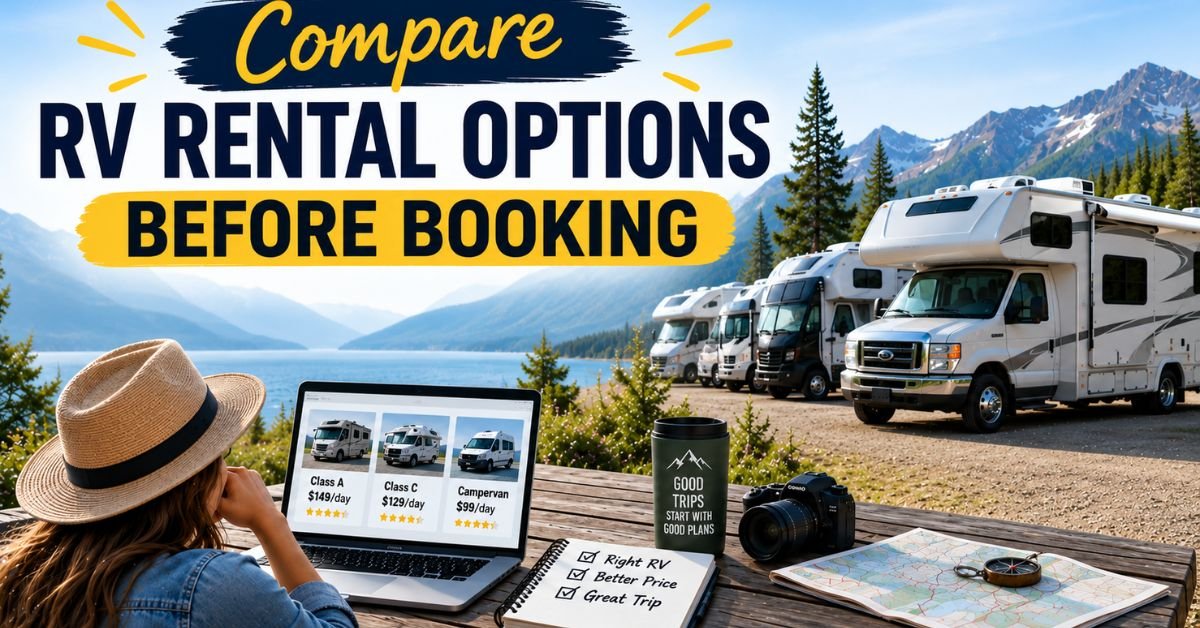
Choosing an RV rental can make a road trip more comfortable, flexible, and enjoyable, but finding the right vehicle is not always as simple as choosing the lowest daily price. Different RVs can vary significantly in size, layout, sleeping capacity, mileage allowance, amenities, fuel efficiency, insurance options, and additional fees.
Before you book, it is important to compare your options carefully. A vehicle that looks affordable at first may become expensive after mileage, cleaning, insurance, generator, or other charges are added. Similarly, a larger RV may offer more space but could consume more fuel and be harder to drive or park.
Learning how to compare RV rental options before booking can help you find a vehicle that matches your travel plans, group size, budget, and driving experience. Instead of focusing on one feature, you should evaluate the complete rental package.
This guide explains the most important factors to compare when choosing an RV rental, including price, RV type, size, sleeping arrangements, mileage, fuel costs, amenities, insurance, rental policies, reviews, and more.
Why You Should Compare RV Rental Options
The first RV rental you find may not necessarily be the best option for your trip. Rental providers can offer different prices and conditions for similar vehicles.
Prices Can Vary
Two similar RVs can have different daily rates depending on their age, features, location, season, availability, and rental terms.
For example, one vehicle might cost $140 per night while another costs $155. At first glance, the $140 option looks cheaper. However, the more expensive option may include additional mileage, bedding, cookware, roadside assistance, or other useful features.
This is why comparing the complete cost is more useful than comparing only the advertised nightly rate.
Every Trip Has Different Requirements
The best RV rental for a couple travelling for three nights may not be suitable for a family travelling for two weeks.
Before comparing vehicles, think about:
- Number of travellers
- Trip duration
- Driving distance
- Destinations
- Campsites
- Sleeping requirements
- Kitchen needs
- Bathroom requirements
- Storage needs
- Driving experience
- Budget
Once you understand your requirements, comparing rental options becomes much easier.
Compare the Type of RV
One of the first things to compare is the type of RV rental.
Different RV categories provide different combinations of space, comfort, driving convenience, and cost.
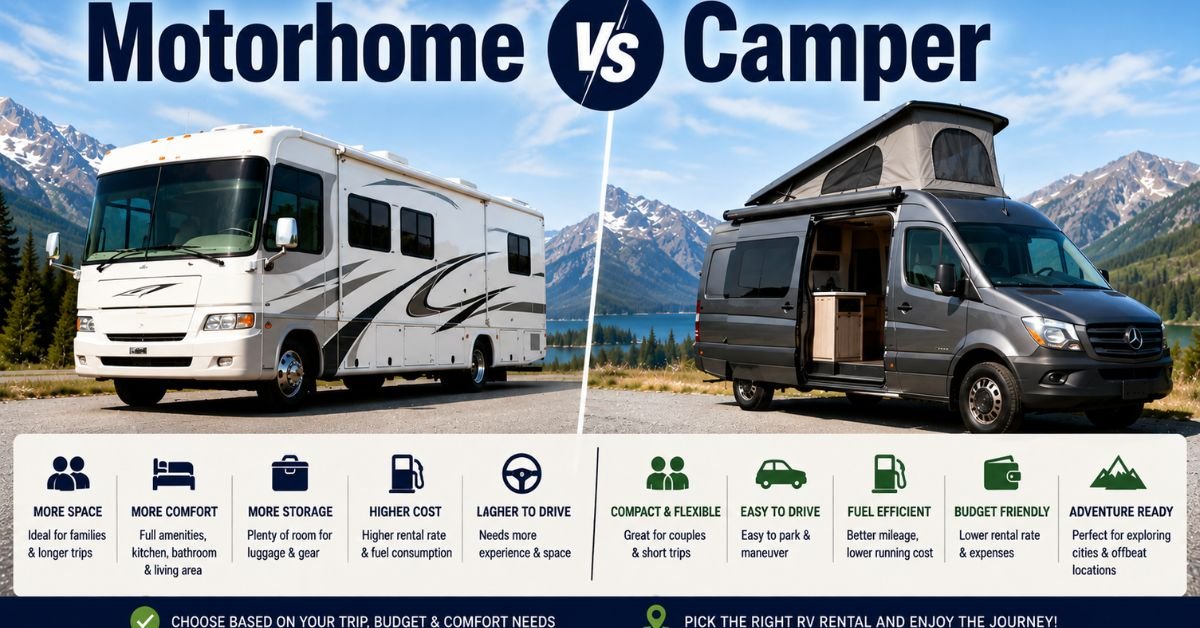
Class A Motorhomes
Class A motorhomes are generally large and spacious. They can include full kitchens, bathrooms, bedrooms, living areas, and significant storage.
They can work well for families and travellers who want a home-like experience.
However, their size can make them more difficult to drive and park. Fuel costs can also be higher than those of smaller RVs.
Class B Campervans
Class B campervans are generally smaller and easier to manoeuvre.
They can be a practical choice for couples or solo travellers who want flexibility.
The main trade-off is interior space. Storage, sleeping areas, and bathrooms can be more compact.
Class C Motorhomes
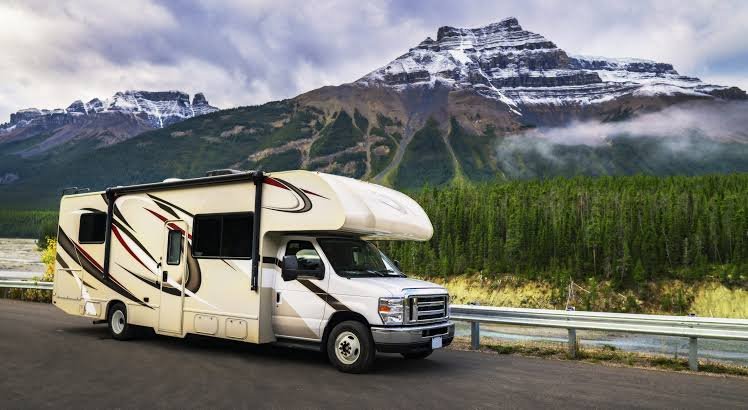
Class C motorhomes offer a balance between size and practicality.
Many include sleeping areas, a kitchen, bathroom, storage, and additional living space. They can be suitable for families and first-time RV travellers.
Travel Trailers
Travel trailers are towable RVs that require a suitable tow vehicle.
Before choosing a travel trailer, compare the trailer’s weight and towing requirements with your vehicle’s capacity.
Never assume that a vehicle can safely tow a particular trailer simply because the trailer appears manageable.
Compare the Total Rental Price
Price is one of the most important factors when comparing an RV rental, but the daily rate should not be your only consideration.
Look Beyond the Advertised Rate
The final rental price can include:
- Base rental rate
- Mileage charges
- Insurance
- Cleaning fees
- Generator charges
- Pet fees
- Additional driver fees
- Equipment rental
- Delivery charges
- Service fees
- Taxes
- Security deposit
The exact charges vary between rental providers.
Calculate the Full Trip Cost
Suppose one RV costs $125 per night and another costs $150.
For a seven-night trip:
RV A: $125 × 7 = $875
RV B: $150 × 7 = $1,050
The first vehicle appears to save $175. But if RV A has expensive mileage charges and RV B includes more mileage, the final difference could be much smaller.
Always calculate the estimated total cost before making a decision.
Compare Mileage Policies
Mileage is a major factor when comparing an RV rental, especially for long road trips.
Unlimited Mileage
Some rental options may include unlimited mileage.
This can make budgeting easier because your driving distance has less impact on the rental bill.
However, unlimited mileage does not necessarily make a vehicle the cheapest option. Compare it with the overall rental price.
Limited Mileage
Other rentals may include a mileage allowance.
For example, the rental could include a certain number of miles and charge a fee for every additional mile.
If you plan to drive several hundred or thousand miles, additional mileage charges can add up quickly.
Estimate Your Route
Before booking, estimate your total driving distance.
Include:
- Starting point
- Main destinations
- Campsites
- Local sightseeing
- Detours
- Return journey
Add some extra distance for unexpected driving.
This will help you determine which mileage policy provides better value.
Compare Fuel Efficiency

Fuel is another major expense that should be included in your RV rental comparison.
Larger Does Not Always Mean Better
A large RV can offer more space, but it may use more fuel than a compact campervan.
If you are travelling a long distance, fuel consumption can significantly affect your overall budget.
Estimate Fuel Costs
You can make a simple estimate using:
Total miles ÷ estimated miles per gallon × fuel price = estimated fuel cost
For example, if your trip is 1,500 miles and the RV averages 10 miles per gallon:
1,500 ÷ 10 = 150 gallons
You can then multiply 150 gallons by your estimated fuel price.
Actual fuel consumption varies depending on the vehicle, road conditions, speed, terrain, weather, and driving style, so use the calculation as a planning estimate.
Compare RV Size and Dimensions
The size of an RV rental affects comfort, fuel costs, parking, and campsite availability.
Interior Space
A larger RV can provide:
- More sleeping space
- Larger kitchen
- Bigger bathroom
- More storage
- More seating
- Separate living areas
However, more space can also mean a higher rental price.
Exterior Dimensions
Check:
- Length
- Width
- Height
- Weight
These measurements matter when driving through tunnels, using parking areas, entering campsites, and travelling on narrow roads.
Consider Your Driving Experience
If you have never driven an RV before, a smaller vehicle may be easier to handle.
Large motorhomes require greater awareness when:
- Turning
- Reversing
- Parking
- Changing lanes
- Entering fuel stations
- Driving through narrow roads
Choose a vehicle you can operate confidently.
Compare Sleeping Capacity
The advertised sleeping capacity does not tell the whole story.
An RV may technically sleep six people, but the sleeping areas may not provide equal comfort.
Look at the Bed Layout
Check whether the RV includes:
- Permanent beds
- Convertible sofas
- Bunk beds
- Dinette beds
- Over-cab sleeping areas
If you are travelling with children, bunk beds can be useful. Couples may prefer a permanent bed.
Consider Long Trips
Convertible beds can be practical for short trips, but having to convert the dining area every night may become inconvenient during a longer journey.
Compare the actual sleeping layout rather than relying only on the number shown in the listing.
Compare Kitchen Facilities
A kitchen can help you save money on food during an RV trip.
Check Appliances
Depending on the vehicle, an RV rental may include:
- Refrigerator
- Freezer
- Stove
- Oven
- Microwave
- Sink
- Coffee maker
- Counter space
Not every RV includes the same equipment.
Check Cookware
Ask whether the rental includes:
- Pots
- Pans
- Plates
- Bowls
- Cups
- Cutlery
- Cooking utensils
If these items are not included, you may need to bring or rent them separately.
Compare Bathroom Facilities
Bathroom facilities can vary significantly between RVs.
Full Bathroom
Larger motorhomes may have separate shower and toilet areas.
This can be useful for families and longer trips.
Wet Bath
Some smaller RVs use a wet-bath design where the toilet and shower share the same space.
This saves room but may be less comfortable for some travellers.
No Indoor Bathroom
Some campervans may have limited or no indoor bathroom facilities.
If a private bathroom is important to you, make sure you confirm this before booking.
Compare Storage Space
Storage is often overlooked when choosing an RV rental.
However, limited storage can become frustrating when travelling for several days.
Check Interior Storage
Look at cupboards, wardrobes, under-bed storage, and other interior compartments.
Check Exterior Storage
Larger RVs may have external compartments for:
- Camping chairs
- Outdoor equipment
- Sports gear
- Coolers
- Luggage
Consider how much equipment you plan to bring before selecting your RV.
Compare Included Amenities
Different RVs can include very different amenities.
Before booking, compare features such as:
- Air conditioning
- Heating
- Television
- Wi-Fi
- Bluetooth
- USB charging
- Backup camera
- Awning
- Outdoor chairs
- Generator
- Solar panels
- Kitchen appliances
Do not automatically pay more for luxury features you are unlikely to use.
Choose amenities based on your actual travel style.
Compare Insurance Coverage
Insurance is an important part of comparing an RV rental.
Check What Is Included
Ask whether the rental includes:
- Liability coverage
- Collision coverage
- Comprehensive coverage
- Roadside assistance
- Personal belongings coverage
The exact protection varies by rental provider and insurance policy.
Check the Deductible
Two rental options may offer similar insurance but have different deductibles.
A lower deductible may be useful if you want to reduce your potential out-of-pocket expense after a covered claim.
Always read the insurance terms and exclusions before booking.
Compare Security Deposits
A security deposit can affect your available travel budget.
Check the Amount
Find out how much the rental provider requires and when it is collected.
Understand Refund Conditions
Ask when the deposit is returned and what circumstances could result in deductions.
Potential deductions may relate to:
- Damage
- Cleaning
- Missing equipment
- Late return
- Fuel level
- Waste tank requirements
Knowing the deposit rules in advance can help prevent surprises.
Compare Cancellation Policies
Travel plans can change, so the cancellation policy is important.
Look for Flexible Terms
Some rental providers may allow changes or cancellations under certain conditions.
Others may charge fees depending on how close the cancellation is to the pickup date.
Before booking, check:
- Cancellation deadline
- Refund amount
- Change fees
- Date modification rules
- Deposit refund conditions
A slightly more expensive RV rental with a flexible cancellation policy may provide better value if your plans are uncertain.
Compare Pickup and Return Locations
The location of the rental can affect both convenience and total cost.
Check Distance From Your Starting Point
A cheaper RV located several hours away may not actually save money after transportation costs.
Consider:
- Taxi or rideshare costs
- Public transport
- Hotel costs
- Travel time
- Fuel costs
Compare Return Requirements
Some providers require the RV to be returned:
- With a specific fuel level
- With waste tanks emptied
- Cleaned
- At a specific time
Failing to meet return requirements can result in additional charges.
Compare Customer Reviews
Customer reviews can provide valuable information when comparing an RV rental.
Look for Consistent Feedback
Pay attention to repeated comments about:
- Vehicle cleanliness
- Mechanical condition
- Communication
- Pickup experience
- Accuracy of the listing
- Comfort
- Return process
- Unexpected fees
One negative review does not necessarily mean the vehicle is a bad choice. Look for patterns.
Check Recent Reviews
Recent reviews can be more useful than very old feedback because vehicle condition, ownership, pricing, and rental policies can change.
Compare the RV’s Condition
Photos are helpful, but they should not be your only source of information.
Check Vehicle Age
A newer RV may offer updated appliances, technology, interiors, and safety features.
An older RV may be cheaper but could show more wear.
Review Maintenance Information
If available, check whether renters mention:
- Mechanical problems
- Plumbing issues
- Appliance failures
- Air conditioning problems
- Electrical issues
A lower rental price may not be worth it if the vehicle has recurring problems.
Compare Pet Policies
If you are travelling with a pet, pet policies can make one RV rental much more suitable than another.
Check:
- Whether pets are allowed
- Number of pets permitted
- Pet fees
- Cleaning requirements
- Breed restrictions
- Areas where pets are allowed
Never assume pets are allowed simply because the RV is suitable for a family trip.
Compare Additional Driver Rules
If several people plan to drive, check the additional driver policy.
Some providers may require all drivers to be registered.
There may also be age or licence requirements.
Make sure every driver understands the RV’s size and driving characteristics before starting the journey.
Compare Generator Rules
Generators can be useful when camping without electrical hookups.
However, generator usage can come with additional charges.
Check Included Hours
Some rentals may include a certain number of generator hours.
Additional usage may be charged separately.
Understand Where Generators Can Be Used
Campgrounds may have their own rules regarding generator operation.
Always follow the rental agreement and campground requirements.
Compare Campsite Compatibility
Your choice of RV rental should match your planned campsites.
Check RV Length Requirements
Some campsites have maximum vehicle lengths.
A large motorhome may not fit into every site.
Check Hookup Requirements
If you want electricity, water, or sewer connections, make sure the RV and campsite support compatible hookups.
This is especially important for longer trips.
Compare the Value of Included Equipment
One RV may cost slightly more but include equipment that you would otherwise need to rent.
For example, a rental may include:
- Bedding
- Towels
- Cookware
- Outdoor chairs
- Camping table
- Kitchen supplies
- Generator
- Bike rack
Calculate the replacement or rental cost of these items before deciding which RV offers better value.
Create an RV Rental Comparison Table
A simple comparison table can make your decision easier.
| Feature | RV Option 1 | RV Option 2 | RV Option 3 |
|---|---|---|---|
| Daily price | $ | $$ | $$ |
| Total rental cost | Compare | Compare | Compare |
| Sleeping capacity | Check | Check | Check |
| Mileage | Check | Check | Check |
| Fuel efficiency | Check | Check | Check |
| Kitchen | Check | Check | Check |
| Bathroom | Check | Check | Check |
| Storage | Check | Check | Check |
| Insurance | Check | Check | Check |
| Deposit | Check | Check | Check |
| Generator | Check | Check | Check |
| Pet policy | Check | Check | Check |
| Reviews | Check | Check | Check |
| Cancellation | Check | Check | Check |
This comparison helps you see which RV rental provides the strongest overall value.
Calculate the Cost Per Traveller

If you are travelling with several people, consider the cost per traveller.
For example, suppose an RV costs $1,400 for a seven-night trip.
If four people are travelling:
$1,400 ÷ 4 = $350 per person
You can then compare this with the cost of hotels, rental cars, meals, and other travel expenses.
This does not mean an RV will always be cheaper, but it provides another useful way to evaluate the value.
Compare RV Rental Options Based on Your Trip
Different trips require different vehicles.
Weekend Trip
For a short trip, a compact campervan may be enough.
You may not need a large kitchen, extensive storage, or multiple sleeping areas.
Family Road Trip
Families may benefit from a larger Class C or similar RV with multiple sleeping areas, a kitchen, bathroom, and additional storage.
Long-Distance Road Trip
For a long-distance journey, focus heavily on:
- Fuel efficiency
- Mileage
- Driving comfort
- Storage
- Reliability
- Sleeping comfort
Luxury RV Vacation
If comfort is the priority, you may prefer a premium motorhome with larger living areas and upgraded amenities.
In this case, focus on the complete experience rather than simply looking for the lowest price.
Consider the Rental Season
The time of year can influence the price and availability of an RV rental.
Peak Season
Summer holidays and major travel periods can have higher demand.
Booking early may provide more options.
Shoulder Season
Spring and autumn can offer a balance between availability, weather, and demand in many destinations.
Off-Season
Some destinations have lower RV demand during colder or less popular months.
If your schedule is flexible, compare prices across different dates.
Common Mistakes When Comparing RV Rentals
Choosing Only by Daily Price
The lowest daily price may not produce the lowest overall cost.
Ignoring Mileage
Long-distance trips can become expensive if mileage charges are high.
Renting an RV That Is Too Large
Extra space can be useful, but a large vehicle may increase rental and fuel costs.
Forgetting Storage
A vehicle may have enough beds but not enough storage for your luggage.
Ignoring Reviews
Reviews can reveal problems that are not obvious from photographs.
Not Reading the Rental Agreement
Important fees and restrictions can be hidden in the terms.
Choosing an RV You Cannot Comfortably Drive
A vehicle that is difficult to operate can make the entire trip stressful.
Questions to Ask Before Booking an RV Rental
Before confirming your RV rental, ask the rental provider:
What Is Included in the Price?
Ask about bedding, cookware, mileage, insurance, equipment, and other inclusions.
What Additional Fees Apply?
Request a complete breakdown of potential charges.
How Much Mileage Is Included?
Confirm the mileage allowance and additional-mile rate.
What Is the Security Deposit?
Ask how much it is and when it will be refunded.
What Insurance Is Included?
Check liability, collision, comprehensive, and other relevant coverage.
Are Pets Allowed?
Confirm pet rules and fees.
Can Additional Drivers Operate the RV?
Check registration and driver requirements.
What Happens If the RV Breaks Down?
Ask about roadside assistance and emergency support.
What Are the Return Requirements?
Confirm fuel, cleaning, waste tanks, timing, and other return conditions.
A Simple RV Rental Comparison Checklist
Use this checklist before making your reservation:
- Compare at least three suitable RVs
- Check the RV type
- Confirm sleeping capacity
- Check bed sizes
- Review vehicle dimensions
- Estimate total mileage
- Compare mileage policies
- Compare fuel efficiency
- Calculate fuel costs
- Compare the complete rental price
- Check insurance
- Review deductibles
- Check the security deposit
- Compare kitchen equipment
- Check bathroom facilities
- Review storage space
- Check generator rules
- Check pet policies
- Review additional driver rules
- Read customer reviews
- Check cancellation terms
- Confirm pickup location
- Confirm return requirements
- Check campsite compatibility
- Read the complete rental agreement
Must Read:
- RV Rental Insurance: What Coverage Do You Need?
- When Is the Best Time to Book an RV Rental?
- What Is Included in an RV Rental? Everything to Know
Final Thoughts:
Learning how to compare RV rental options before booking can help you make a smarter decision and avoid unexpected costs during your trip. The best RV is not necessarily the largest, newest, or cheapest vehicle. It is the one that fits your travel plans, group size, driving ability, comfort requirements, and budget.
Start by deciding what you actually need. Think about how many people are travelling, how far you plan to drive, where you will stay, and what amenities are important. Then compare RV types, sizes, layouts, prices, mileage policies, fuel efficiency, and included features.
Do not stop at the advertised daily rate. Calculate the complete cost of your RV rental, including mileage, fuel, insurance, campground fees, cleaning, generator use, deposits, equipment, and other potential charges.
Pay close attention to the vehicle’s sleeping arrangements, bathroom facilities, kitchen, storage, and dimensions. A vehicle can look perfect online but still be uncomfortable if it does not have enough storage or sleeping space for your group.
Insurance and rental policies should also be part of your comparison. Check coverage, deductibles, authorised drivers, pet rules, cancellation terms, and roadside assistance before you make a reservation.
Customer reviews can provide another valuable layer of information. Look for recent and consistent feedback about the vehicle’s condition, cleanliness, reliability, owner communication, pickup process, and return experience.
Finally, consider the type of road trip you are planning. A compact campervan may be ideal for a couple exploring scenic roads, while a larger motorhome may be more suitable for a family holiday. For long-distance trips, fuel efficiency and mileage can be more important than luxury features.
The smartest approach is to compare the total value of each RV rental, not just the headline price. When you evaluate the vehicle, costs, policies, amenities, reviews, and practical requirements together, you are more likely to find an RV that makes your road trip comfortable, predictable, and enjoyable.